Roy Ayers Brings Toronto True Neo-Soul
By Ryan B. Patrick
Pride Entertainment Writer
Dec 7 2005
It’s called “breakjazz”, and it’s a relatively new subgenre of jazz – a live improvisational mix of turntable loops and samples, trumpet, keyboard, sax and bass. It’s jazz for a new generation, and judging from the crowd response at the launch of the NuJazz Society’s JazzByGenre event at the Mod Club in Toronto recently, it’s here to stay.
According to the Toronto-based Nu Jazz Society, the JazzByGenre initiative is a new jazz series of events created to represent and showcase jazz through various genres of music.
Headlined by legendary jazz icon Roy Ayers, the show mixed a little of the old with the new.
The acid jazz and funk bandleader, and master of the vibraphone – descendent of the African xylophone instrument – is vastly underrated. The Los Angeles native’s innovative acid jazz grooves paved the way for funk artists like George Clinton and Parliament.
Ayer’s oft-sampled hits (he’s one of the most sampled music artists in history, with tracks such as “Running Away” and the classic, “Everybody Loves the Sunshine”) make him a founding father of today’s dance and hip hop generation. Even the “neo-soul” genre owes a debt to Ayers as fusing soul and jazz is Ayer’s forte. He’s worked with artists Diddy, A Tribe Called Quest, Whitney Houston and Mary J. Blige.
“I’m very proud of it,” Ayers said of his body of work recently.
“I was talking to Erykah Badu, and she was telling me that I was the ‘neo-soul man’. She said people like herself, Jill Scott, Alicia Keys and The Roots, all consider me the one who created that sound, that ‘neo-soul’ sound. I was just like, ‘Wow’.
“You know, she’s so positive anyway, the way she says things. I was just like, ‘Wow, this is a compliment and a half’.”
And, although Ayers may be getting up there in age, he’s still got that funk.
He performed his signature blend of latin jazz, R&B, funk and soul, with a rousing and well-received performance of seminal hit, “Everybody Loves The Sunshine” at his Mod Club show.
Jazz may be unfairly known as a stodgy medium, but events like The Nu Jazz Society’s JazzByGenre may well dispel that theory.
With the JazzByGenre (www.jazzbygenre.com) launch, the newly-created NuJazz Society’s goal is twofold: 1) to introduce jazz to a younger demographic; and 2) to raise the profile of jazz music in Toronto.
To that end, the night featured spoken word artists Anne-Marie Woods and Al St. Louis, who set the mood with a poetic history of the jazz genre.
But the official introduction to breakjazz was through opening act Kush. The live DJ/turntablist and groove ensemble is an all-star line-up of musicians (featuring bandleader Etric Lyons, Eddie Bullen, Robert Sibony, with special guests Nick “The Brownman” Ali and world-renowned Barbadian saxophonist Arturo Tappin).
The group performed a blend of soul/funk/house/hip hop and R&B jazz with DJ J-Tec’s improvisational mixing and scratching being an integrated part of the band.
It’s something that must be experienced live to really appreciate. Picture your traditional jazz set – trumpet, bass, sax, keys – with a hip hop DJ in the mix, interspersing “traditional” hip hop, funk and house music loops and sample breaks.
It wasn’t flawless, and didn’t always blend, but the overall sound was never discordant. To the contrary – once you realize that the Kush collective essentially “play as they go”, (the band says they don’t pre-rehearse) and coordinate the rhythm, live on stage, one gets a great appreciation for the emerging subgenre. The end result is a frenetic jazzy-house and hip hop-jazz hybrid that the crowd ate up.
The JazzByGenre series will run, every three months, and then launch its annual jazz festival this coming summer. According to the organization, the next installment in the series is slated to put the spotlight on Caribbean jazz.
Tuesday, December 13, 2005


Canadian Urban Music Awards Still A Step Up
Canadian Urban Music Awards Still A Step Up
By Ryan B. Patrick
Pride Entertainment Writer
Dec 7 2005
It was an evening punctuated by technical difficulties, audio gaffes and extended delays, yet, the seventh annual Canadian Urban Music Awards (CUMAs) still went on November 29, a tribute to a blossoming urban music industry.
This year marked the first time that the annual awards show, put on by the Urban Music Association of Canada (UMAC), was split up into a two-night affair. This year’s awards were handed out in 25 categories – at either a dinner on November 28 or at November 29’s “live” recorded-for-TV show – running the urban music gamut from reggae to gospel.
In particular, the event made a good stab to showcasing genres outside of hip hop and R&B.
Show host and comedian Russell Peters’ lethal improv kept the crowd in stitches at the November 29 event, which featured standout performances by Divine Brown, a rousing “greatest hits” medley by rapper Maestro, and performances by R&B diva Jully Black, Fito Blanko, ending with a typically energetic set from “Everyday Rudebwoy”, Kardinal Offishall.
This year’s big winner was Toronto’s own Divine Brown.
The R&B/soul vocalist, who has been experiencing national success with her debut album, picked up New Artist Of The Year honours, along with winning in the R&B Recording Of The Year category for her hit single, “Old Skool Love”.
Another huge victor was hip hop’s k-os, who nabbed Songwriter Of The Year and The Fan’s Choice Award.
In a minor upset, newcomer K’naan beat out k-os, Kardinal Offishall, Maestro and Rochester aka Juice to win the Hip Hop Recording Of The Year award. The Somali-born, Toronto-based rapper has been making waves lately with his single “Strugglin’”, off his The Dusty Foot Philosopher debut.
Urban music icon Farley Flex was a double winner, grabbing Media Personality Of The Year (for TV’s “Canadian Idol”), and was also honoured with a Special Achievement Award for the manager/promoter’s extensive effort in the Canadian music industry.
Yet, unfortunately, certain technical and sound issues threatened to put a damper on the event, and made the show run much longer than anticipated.
Still, most attendees noted that the show was a success, particularly in showing that the domestic urban music industry is finally maturing and proving sustainable. The show also did a tasteful job in addressing local issues, with an emotive performance by local spoken word artists and the bringing on stage of a mother whose child had been affected by violence. For spoken word to be included in the awards show says a lot about the growth of the subgenre and the overall diversity of the urban music community, said Toronto-based spoken word artist Dwayne Morgan, who won Spoken Word Recording Of The Year for “Mother I Understand.”
“What we’re doing is growing…There was a time where (one artist) dominated anything that had to do with rap or hip hop,” Morgan told Pride News Magazine. “[The CUMAs are about] having that outlet where artists can record something and know that it can be recognized. It’s definitely a good thing and something that can inspire others.”
The show also attempted to bridge the gap (so to speak) between the older African Canadian music generation and the current “urban” music scene by presenting a Lifetime Achievement Award to local jazz icon Archie Alleyne.
The legendary African Canadian drummer – who has played with such luminaries as Billie Holiday, Lester Young and Donald Byrd – has been a mainstay of the local music scene for over five decades. The musician is also an avid historian, and is actively pushing for the development of a permanent facility for African Canadian music, one that archives and promotes the contributions of local artists.
“I’m glad that my own community is starting to recognize me, which is rather important,” Alleyne told Pride News Magazine about winning the CUMA.
“Sometimes (Black) music doesn’t get the same respect as it should, as far as social contributions are concerned.”
The CUMAs are a valuable step towards empowering the community and getting the musical contributions of African Canadians acknowledged, Alleyne added, noting that, despite the technical problems the show had, the CUMAs have come so far, and he’s proud to see African-Canadians getting a platform to be recognized for their art.
“Jazz and blues are the foundations of this music,” Alleyne said. “I’m really proud of the new generation of music that is out there.”
The musician currently leads the acclaimed hard bop jazz band Kollage and operates the Archie Alleyne Youth Mentorship Program, which provides innercity students the opportunity to develop as jazz musicians, vocalists and dancers, under the guidance of professional jazz artists.
It’s incumbent on the older African Canadian generation to connect with the younger set, Alleyne said, adding, that there is a thriving community of young African Canadian musicians that need to be supported.
“We have to get rid of the gunslingers and give them an instrument to play instead,” the jazz icon said. “They’ll bring happiness, not only to themselves, but also our community.”
Other winners included Blessed (Reggae Recording of the Year for hit single, “Reggae Time”); Ranee Lee/Oliver Jones (Jazz Recording of the Year); Patricia Shirley (Gospel Recording of the Year for “Real Love”); Jully Black (Dance/Electronic Recording of the Year for “Sweat of Your Brow”); and a well-deserved win for Soca’s King Cosmos, who won for his “Island Girl” track.
“We’ve grown quite a bit this past year...There were a lot of artists that came out this year,” Jully Black told the Canadian Press. “We’re building soldiers. It’s great for the urban community.”
The CUMAs are scheduled to be televised on SUNTV on December 21.
By Ryan B. Patrick
Pride Entertainment Writer
Dec 7 2005
It was an evening punctuated by technical difficulties, audio gaffes and extended delays, yet, the seventh annual Canadian Urban Music Awards (CUMAs) still went on November 29, a tribute to a blossoming urban music industry.
This year marked the first time that the annual awards show, put on by the Urban Music Association of Canada (UMAC), was split up into a two-night affair. This year’s awards were handed out in 25 categories – at either a dinner on November 28 or at November 29’s “live” recorded-for-TV show – running the urban music gamut from reggae to gospel.
In particular, the event made a good stab to showcasing genres outside of hip hop and R&B.
Show host and comedian Russell Peters’ lethal improv kept the crowd in stitches at the November 29 event, which featured standout performances by Divine Brown, a rousing “greatest hits” medley by rapper Maestro, and performances by R&B diva Jully Black, Fito Blanko, ending with a typically energetic set from “Everyday Rudebwoy”, Kardinal Offishall.
This year’s big winner was Toronto’s own Divine Brown.
The R&B/soul vocalist, who has been experiencing national success with her debut album, picked up New Artist Of The Year honours, along with winning in the R&B Recording Of The Year category for her hit single, “Old Skool Love”.
Another huge victor was hip hop’s k-os, who nabbed Songwriter Of The Year and The Fan’s Choice Award.
In a minor upset, newcomer K’naan beat out k-os, Kardinal Offishall, Maestro and Rochester aka Juice to win the Hip Hop Recording Of The Year award. The Somali-born, Toronto-based rapper has been making waves lately with his single “Strugglin’”, off his The Dusty Foot Philosopher debut.
Urban music icon Farley Flex was a double winner, grabbing Media Personality Of The Year (for TV’s “Canadian Idol”), and was also honoured with a Special Achievement Award for the manager/promoter’s extensive effort in the Canadian music industry.
Yet, unfortunately, certain technical and sound issues threatened to put a damper on the event, and made the show run much longer than anticipated.
Still, most attendees noted that the show was a success, particularly in showing that the domestic urban music industry is finally maturing and proving sustainable. The show also did a tasteful job in addressing local issues, with an emotive performance by local spoken word artists and the bringing on stage of a mother whose child had been affected by violence. For spoken word to be included in the awards show says a lot about the growth of the subgenre and the overall diversity of the urban music community, said Toronto-based spoken word artist Dwayne Morgan, who won Spoken Word Recording Of The Year for “Mother I Understand.”
“What we’re doing is growing…There was a time where (one artist) dominated anything that had to do with rap or hip hop,” Morgan told Pride News Magazine. “[The CUMAs are about] having that outlet where artists can record something and know that it can be recognized. It’s definitely a good thing and something that can inspire others.”
The show also attempted to bridge the gap (so to speak) between the older African Canadian music generation and the current “urban” music scene by presenting a Lifetime Achievement Award to local jazz icon Archie Alleyne.
The legendary African Canadian drummer – who has played with such luminaries as Billie Holiday, Lester Young and Donald Byrd – has been a mainstay of the local music scene for over five decades. The musician is also an avid historian, and is actively pushing for the development of a permanent facility for African Canadian music, one that archives and promotes the contributions of local artists.
“I’m glad that my own community is starting to recognize me, which is rather important,” Alleyne told Pride News Magazine about winning the CUMA.
“Sometimes (Black) music doesn’t get the same respect as it should, as far as social contributions are concerned.”
The CUMAs are a valuable step towards empowering the community and getting the musical contributions of African Canadians acknowledged, Alleyne added, noting that, despite the technical problems the show had, the CUMAs have come so far, and he’s proud to see African-Canadians getting a platform to be recognized for their art.
“Jazz and blues are the foundations of this music,” Alleyne said. “I’m really proud of the new generation of music that is out there.”
The musician currently leads the acclaimed hard bop jazz band Kollage and operates the Archie Alleyne Youth Mentorship Program, which provides innercity students the opportunity to develop as jazz musicians, vocalists and dancers, under the guidance of professional jazz artists.
It’s incumbent on the older African Canadian generation to connect with the younger set, Alleyne said, adding, that there is a thriving community of young African Canadian musicians that need to be supported.
“We have to get rid of the gunslingers and give them an instrument to play instead,” the jazz icon said. “They’ll bring happiness, not only to themselves, but also our community.”
Other winners included Blessed (Reggae Recording of the Year for hit single, “Reggae Time”); Ranee Lee/Oliver Jones (Jazz Recording of the Year); Patricia Shirley (Gospel Recording of the Year for “Real Love”); Jully Black (Dance/Electronic Recording of the Year for “Sweat of Your Brow”); and a well-deserved win for Soca’s King Cosmos, who won for his “Island Girl” track.
“We’ve grown quite a bit this past year...There were a lot of artists that came out this year,” Jully Black told the Canadian Press. “We’re building soldiers. It’s great for the urban community.”
The CUMAs are scheduled to be televised on SUNTV on December 21.
Saturday, December 03, 2005
No Common Sense, Not 50 Cent, The Cause Of T.O.’s Gun Problem
No Common Sense, Not 50 Cent, The Cause Of T.O.’s Gun Problem
nov 30 2005
By Ryan Patrick
Pride Entertainment Writer
Whitby MP Dan McTeague’s recent call to ban popular gangsta rapper 50 Cent from performing in Canada is your classic case of political grandstanding.
Whether you agree with the notion or not is, frankly, immaterial. It’s a tried and true formula: make a wildly controversial and polarizing statement, whip the media into a frenzy, stand back and pat yourself on the back for doing your “part” in tackling the issue.
On November 22, McTeague asked Immigration Minister Joe Volpe to restrict Curtis “50 Cent” Jackson from entering the country on the grounds that he glorifies gun violence. The hardcore rapper has a criminal record and would need a ministerial permit to enter Canada.
“I don’t think people in Toronto, or any urban centre, need or want to hear Mr. Jackson’s message right now…I think it’s time we send a message of our own to those who glorify violence that their gratuitous violence and movies are not welcome in our country,” McTeague says.
McTeague claims he’s “trying to protect impressionable young men in our communities who are being destroyed in the prime of their lives.”
I’ll admit, I’m not a huge fan of 50 Cent’s music. But I am, also, not a fan of censorship, nor do I agree with the suggestion Jackson’s music amounts to an incitement to commit violence. And, if you are a proponent of free speech, you will defend his right to free expression; to suggest that there is a direct link between lyrics and an increase in gun violence is reaching.
If you ban 50 Cent, why stop there? Why not ban the multitude of artists that cross the border every year? Where would it stop? And what would it accomplish besides raising the notoriety profile of the particular artist?
Problem is, even if we weren’t on the eve of an election call, McTeague’s rhetoric does precious little to stem the growing gun violence in our city.
It also does little to address the deep-rooted evils that are associated with the anti-Black racism and institutional racism that has contributed to Toronto’s gun crime.
Besides, where was McTeague this past summer, when 50 Cent was practically living in the city during the filming of his crime drama, Get Rich or Die Tryin’?”
It’s far too easy to blame hip hop for youth violence.
Recently, I interviewed Toronto rapper Kardinal Offishall, who pointed out the guns have always been a constant on Toronto streets.
What’s changed, he suggested, is the mentality of today’s youth, who seem to be even more disenfranchised and disillusioned than the generation before them.
Black youth have been alienated and marginalized by government cutbacks and neighborhood neglect. McTeague’s blaming of 50 Cent is a convenient method to score publicity, because it’s bound to be a controversial statement. For McTeague to use 50 Cent to sidetrack valid discourse on the real problems contributing to the crisis – inadequate schools and housing, a desperate need for social programs, and high unemployment rate – is irresponsible.
No one is suggesting that, by simply building a basketball court, the situation will be resolved.
But it’s a start.
Also, at this stage in the game, the African Canadian community should be beyond pointing fingers and move towards healing. It should be beyond taking stock in those outside the community who feel compelled to cluck their tongues and wonder aloud why the Black community isn’t doing more.
It’s no secret our community has to work harder to achieve the same gains. It’s a fact of life and we should start living up to it. We’ve got to start fighting back against the system instead of incessantly claiming victimhood.
On the other hand, if local politicians like McTeague are truly interested in finding solutions to gun violence, they should save the empty platitudes and look at the real issues, the growing disconnect between the haves and have-nots in Toronto. They should examine why the Black community’s relationship with the police is the way that it is. They should look at why a certain element of the Black community is drawn to criminal activity. They should look at re-implementing the recreational activities and job creation programs that contribute to a positive culture and a renewed sense of hope.
50 Cent isn’t the cause of Toronto’s gun problem – a lack of common sense is.
nov 30 2005
By Ryan Patrick
Pride Entertainment Writer
Whitby MP Dan McTeague’s recent call to ban popular gangsta rapper 50 Cent from performing in Canada is your classic case of political grandstanding.
Whether you agree with the notion or not is, frankly, immaterial. It’s a tried and true formula: make a wildly controversial and polarizing statement, whip the media into a frenzy, stand back and pat yourself on the back for doing your “part” in tackling the issue.
On November 22, McTeague asked Immigration Minister Joe Volpe to restrict Curtis “50 Cent” Jackson from entering the country on the grounds that he glorifies gun violence. The hardcore rapper has a criminal record and would need a ministerial permit to enter Canada.
“I don’t think people in Toronto, or any urban centre, need or want to hear Mr. Jackson’s message right now…I think it’s time we send a message of our own to those who glorify violence that their gratuitous violence and movies are not welcome in our country,” McTeague says.
McTeague claims he’s “trying to protect impressionable young men in our communities who are being destroyed in the prime of their lives.”
I’ll admit, I’m not a huge fan of 50 Cent’s music. But I am, also, not a fan of censorship, nor do I agree with the suggestion Jackson’s music amounts to an incitement to commit violence. And, if you are a proponent of free speech, you will defend his right to free expression; to suggest that there is a direct link between lyrics and an increase in gun violence is reaching.
If you ban 50 Cent, why stop there? Why not ban the multitude of artists that cross the border every year? Where would it stop? And what would it accomplish besides raising the notoriety profile of the particular artist?
Problem is, even if we weren’t on the eve of an election call, McTeague’s rhetoric does precious little to stem the growing gun violence in our city.
It also does little to address the deep-rooted evils that are associated with the anti-Black racism and institutional racism that has contributed to Toronto’s gun crime.
Besides, where was McTeague this past summer, when 50 Cent was practically living in the city during the filming of his crime drama, Get Rich or Die Tryin’?”
It’s far too easy to blame hip hop for youth violence.
Recently, I interviewed Toronto rapper Kardinal Offishall, who pointed out the guns have always been a constant on Toronto streets.
What’s changed, he suggested, is the mentality of today’s youth, who seem to be even more disenfranchised and disillusioned than the generation before them.
Black youth have been alienated and marginalized by government cutbacks and neighborhood neglect. McTeague’s blaming of 50 Cent is a convenient method to score publicity, because it’s bound to be a controversial statement. For McTeague to use 50 Cent to sidetrack valid discourse on the real problems contributing to the crisis – inadequate schools and housing, a desperate need for social programs, and high unemployment rate – is irresponsible.
No one is suggesting that, by simply building a basketball court, the situation will be resolved.
But it’s a start.
Also, at this stage in the game, the African Canadian community should be beyond pointing fingers and move towards healing. It should be beyond taking stock in those outside the community who feel compelled to cluck their tongues and wonder aloud why the Black community isn’t doing more.
It’s no secret our community has to work harder to achieve the same gains. It’s a fact of life and we should start living up to it. We’ve got to start fighting back against the system instead of incessantly claiming victimhood.
On the other hand, if local politicians like McTeague are truly interested in finding solutions to gun violence, they should save the empty platitudes and look at the real issues, the growing disconnect between the haves and have-nots in Toronto. They should examine why the Black community’s relationship with the police is the way that it is. They should look at why a certain element of the Black community is drawn to criminal activity. They should look at re-implementing the recreational activities and job creation programs that contribute to a positive culture and a renewed sense of hope.
50 Cent isn’t the cause of Toronto’s gun problem – a lack of common sense is.
Wednesday, November 30, 2005
Farley Flex
Farley Flex:
From Tamarind Seeds to Urban Music’s Special Achiever
By Ryan B. Patrick
Pride Entertainment Writer
Nov 23, 2005
While he is probably best known to the public at large as “the Black judge” on TV’s “Canadian Idol”, Farley Flex has been known within the African Canadian community, as a guiding force for the Canadian urban music industry, for over 20 years.
Flex gets his due props next week, on November 28, at the 2005 Canadian Urban Music Awards, where he’ll receive a Special Achievement Award for his work in the music industry. Even though Flex considers the award to a great honour, he says he’s never been one to sit back and reflect on all his life accomplishments.
“I just keep moving. Success is in the eye of the beholder,” Flex tells Pride News Magazine. “The only time I really look back is when I do motivational speaking, so I have to, as it helps to include that content to motivate people.
“For the most part, I’m looking at the next chapter. I’ve always got goals beyond the ones I attain, so I try to keep my eyes on that prize.”
It was as a young kid selling tamarind seeds to his wide-eyed public school peers that Flex first recognized his own entrepreneurial spirit. Of Trinidadian descent, Farley “Flex” Fridal was born in England and raised in the Malvern part of Scarborough. He used to spend his Christmas holidays in Trinidad and, every year, he would bring back tamarind balls and would sell the seeds to kids at school as “precious stones” from the islands.
“I remember I was eating them at recess and someone was enthralled by the seed,” Flex says. “I started selling from there.”
From there, Flex “officially” started in business as a concert promoter at the age of 15; in his teens is when he really started demonstrating his business acumen. He started holding parties and rollerskating jams, often earning thousands in one night.
“I’m big on knowing who you are and knowing what your skill sets are. It’s about knowing what’s in your toolbox and building on that,” Flex says. “My thing was, I was a very social individual. I played a lot of sports, which allowed me to meet a lot of people. This fueled my confidence that if I had a party that people would come.”
He then segued into becoming an artist manager, handling the career of Canada’s most successful solo rap artist, Maestro Fresh Wes.
Way back then, Flex realized that Wes had the talent and charisma to make it big. The fact that the Canadian music industry didn’t have the infrastructure in place to support an African Canadian hip hop artist didn’t deter him in the least.
“I’m a very ‘cup is half full’ kind of guy,” Flex says. “The fact that no one had really done it before was motivation for me. We knew going in that there was no one out there doing this; I was very confident of Wes’s talent and what he represented in the grand scheme of hip hop.”
There was no blueprint for what Flex and Maestro were doing, but they made a go of it.
The moment they heard the beat for the groundbreaking hit, “Let Your Backbone Slide”, Flex says he knew they had something special. “There was an aura in the room. It was an amazing phase of existence,” Flex recalls.
They financed the video themselves, and soon recognized the importance for national exposure. They managed to book themselves on City-TV’s dance show, “Electric Circus”, which ultimately led to Wes’s record deal.
They then embarked on a cross-Canada tour, which saw them travel to places where the locals had never seen Black people before.
“We were adventurers and mavericks at the time. There’s no other word for it. The foundation we built was really strong relative to the time; there was no
infrastructure for Black music at the time,” Flex says. “It was a really invigorating to travel the country and educate people about the music.”
Flex was also extremely instrumental in submitting the CRTC applications that resulted in the first Black-owned and operated radio station in Canadian history, with Toronto’s FLOW 93.5 FM.
Flex was charged with educating the CRTC board and convincing them what the music represented and about its commercial viability. “I’m big on representing my community in any way I can; FLOW was a big opportunity to do that,” Flex says.
He also played a role in getting urban radio stations such as Vibe in Calgary and the CHUM/Milestone (FLOW) urban radio station in Edmonton off the ground.
“Toronto’s hip hop & R&B” radio station was launched in February 2001 with Flex as its first music director. And the early days weren’t easy, but they were well worth it, Flex notes.
While the station has its critics, Flex notes that FLOW doesn’t get enough credit for its community work.
“FLOW has both a social and economic imperative,” Flex says. “And FLOW does a ton of stuff in the community that people don’t know about.”
Just recently, the station was honoured by the Ontario Association of Broadcasters with the Community Service Award for its Peace Prophets anti-violence campaign.
“It’s wonderful for me that FLOW will stick around,” Flex adds.
His current role as a judge for “Canadian Idol” has expanded his national profile and made him a household name.
“The show’s been great,” the Canadian urban music pioneer says. He regularly makes public-speaking appearances and is committed to working with youth.
“When you work with young people, you’re fueling the game,” Flex says.
He currently acts as a board member of VideoFACT, which is charged with funding the production of music videos for independent Canadian artists. He also operates Plasma Corporation, where he develops and promotes new talent. Currently in his roster are In Essence, Toya Alexis and Belinda Brady, and “Canadian Idol” runner-up Gary Beals.
He is also developing projects for film and television.
Life, for Farley Flex, is good.
In fact, one could recall every single milestone made by the urban music industry in Canada, and Flex was probably a part of it. He has likely spent his whole career discovering, promoting and developing new Canadian talent.
“We, as a people, need to be confident in our culture,” Flex says. “I wake up on Monday morning feeling how most feel on Friday afternoon.
“That’s how I live my life.”
From Tamarind Seeds to Urban Music’s Special Achiever
By Ryan B. Patrick
Pride Entertainment Writer
Nov 23, 2005
While he is probably best known to the public at large as “the Black judge” on TV’s “Canadian Idol”, Farley Flex has been known within the African Canadian community, as a guiding force for the Canadian urban music industry, for over 20 years.
Flex gets his due props next week, on November 28, at the 2005 Canadian Urban Music Awards, where he’ll receive a Special Achievement Award for his work in the music industry. Even though Flex considers the award to a great honour, he says he’s never been one to sit back and reflect on all his life accomplishments.
“I just keep moving. Success is in the eye of the beholder,” Flex tells Pride News Magazine. “The only time I really look back is when I do motivational speaking, so I have to, as it helps to include that content to motivate people.
“For the most part, I’m looking at the next chapter. I’ve always got goals beyond the ones I attain, so I try to keep my eyes on that prize.”
It was as a young kid selling tamarind seeds to his wide-eyed public school peers that Flex first recognized his own entrepreneurial spirit. Of Trinidadian descent, Farley “Flex” Fridal was born in England and raised in the Malvern part of Scarborough. He used to spend his Christmas holidays in Trinidad and, every year, he would bring back tamarind balls and would sell the seeds to kids at school as “precious stones” from the islands.
“I remember I was eating them at recess and someone was enthralled by the seed,” Flex says. “I started selling from there.”
From there, Flex “officially” started in business as a concert promoter at the age of 15; in his teens is when he really started demonstrating his business acumen. He started holding parties and rollerskating jams, often earning thousands in one night.
“I’m big on knowing who you are and knowing what your skill sets are. It’s about knowing what’s in your toolbox and building on that,” Flex says. “My thing was, I was a very social individual. I played a lot of sports, which allowed me to meet a lot of people. This fueled my confidence that if I had a party that people would come.”
He then segued into becoming an artist manager, handling the career of Canada’s most successful solo rap artist, Maestro Fresh Wes.
Way back then, Flex realized that Wes had the talent and charisma to make it big. The fact that the Canadian music industry didn’t have the infrastructure in place to support an African Canadian hip hop artist didn’t deter him in the least.
“I’m a very ‘cup is half full’ kind of guy,” Flex says. “The fact that no one had really done it before was motivation for me. We knew going in that there was no one out there doing this; I was very confident of Wes’s talent and what he represented in the grand scheme of hip hop.”
There was no blueprint for what Flex and Maestro were doing, but they made a go of it.
The moment they heard the beat for the groundbreaking hit, “Let Your Backbone Slide”, Flex says he knew they had something special. “There was an aura in the room. It was an amazing phase of existence,” Flex recalls.
They financed the video themselves, and soon recognized the importance for national exposure. They managed to book themselves on City-TV’s dance show, “Electric Circus”, which ultimately led to Wes’s record deal.
They then embarked on a cross-Canada tour, which saw them travel to places where the locals had never seen Black people before.
“We were adventurers and mavericks at the time. There’s no other word for it. The foundation we built was really strong relative to the time; there was no
infrastructure for Black music at the time,” Flex says. “It was a really invigorating to travel the country and educate people about the music.”
Flex was also extremely instrumental in submitting the CRTC applications that resulted in the first Black-owned and operated radio station in Canadian history, with Toronto’s FLOW 93.5 FM.
Flex was charged with educating the CRTC board and convincing them what the music represented and about its commercial viability. “I’m big on representing my community in any way I can; FLOW was a big opportunity to do that,” Flex says.
He also played a role in getting urban radio stations such as Vibe in Calgary and the CHUM/Milestone (FLOW) urban radio station in Edmonton off the ground.
“Toronto’s hip hop & R&B” radio station was launched in February 2001 with Flex as its first music director. And the early days weren’t easy, but they were well worth it, Flex notes.
While the station has its critics, Flex notes that FLOW doesn’t get enough credit for its community work.
“FLOW has both a social and economic imperative,” Flex says. “And FLOW does a ton of stuff in the community that people don’t know about.”
Just recently, the station was honoured by the Ontario Association of Broadcasters with the Community Service Award for its Peace Prophets anti-violence campaign.
“It’s wonderful for me that FLOW will stick around,” Flex adds.
His current role as a judge for “Canadian Idol” has expanded his national profile and made him a household name.
“The show’s been great,” the Canadian urban music pioneer says. He regularly makes public-speaking appearances and is committed to working with youth.
“When you work with young people, you’re fueling the game,” Flex says.
He currently acts as a board member of VideoFACT, which is charged with funding the production of music videos for independent Canadian artists. He also operates Plasma Corporation, where he develops and promotes new talent. Currently in his roster are In Essence, Toya Alexis and Belinda Brady, and “Canadian Idol” runner-up Gary Beals.
He is also developing projects for film and television.
Life, for Farley Flex, is good.
In fact, one could recall every single milestone made by the urban music industry in Canada, and Flex was probably a part of it. He has likely spent his whole career discovering, promoting and developing new Canadian talent.
“We, as a people, need to be confident in our culture,” Flex says. “I wake up on Monday morning feeling how most feel on Friday afternoon.
“That’s how I live my life.”
Thursday, November 17, 2005
Kardinall Offishall: Toronto's Everyday Rudebwoy

Kardinall Offishall: Toronto's Everyday Rudebwoy
By Ryan B. Patrick
Pride Entertainment Writer
November 16, 2005
Pride News Magazine
There's a song titled, "Everybody Gone Gangsta" on rapper-producer Kardinal Offishall's newest album that perfectly describes the spate of gun crime that Toronto has been experiencing. "I think the mentality that our younger generation has in Toronto right now is real messed up," Offishall tells Pride News Magazine over the phone.
The American rappers that are hot right now, he says, seem to be those glorifying a certain kind of criminal lifestyle that kids are emulating. "I don't believe that the majority of us are ignorant, but there are people that really can't tell the difference between what they see on TV and what is real life."
But the differences between the States and Canada are vast, and there are a lot more opportunities for youth over here, he says, adding that some youth are trying to create a situation that doesn't exist here.
"There are a lot more guns on the streets these days, but guns have always been on Toronto streets," Offishall says.
"It's the person behind the gun as opposed to the guns themselves. There's always been a code of the street, but right about now, a lot of those things are getting thrown out of the window. As far as how it connects to hip hop, there needs to be more balance in the music. The mentality right now is real jacked up."
The song is one of the 14 cuts off the immensely talented Offishall's latest, the aptly-titled album, Fire and Glory, which came out on November 15.
The Scarborough-born rapper's own experience with the music industry has been a trial by fire of sorts and he's long overdue for some glory. The long-awaited album (his first since 2001's Firestarter Vol. 1: Quest For Fire) is a testament to Offishall's matchless "reggae meets hip hop" style.
His first album had him on the cusp of international superstardom. His hits "Bakardi Slang" and "Ol' Time Killin'" earned a gold certification in Canada and were heavily requested on U.S. outlets such as Black Entertainment Television.
But, much like other Canadian artists that were courted south of the border with promises of U.S. record deals and superstardom, things didn't quite go as planned. A couple of years back, he was signed to MCA and was putting the finishing touches on sophomore LP, Firestarter Vol.2: The F Word Theory. A video was shot for the lead single, The Neptunes-produced "Belly Dancer", but the forward motion died when the record label abruptly went under and Offishall (government name Jason Harrow) got lost in the shuffle.
While he wasn't exactly dumped, he was transferred to Geffen/Interscope, the project was indefinitely shelved and Offishall was in a frustrating position where newer artists such as 50 Cent got top priority.
But instead of moping about, Offishall picked up his hustle, touring Europe and Japan, recording countless mixtape-side projects and making cameo appearances on records. His last big mixtape, Kill Bloodclot Bill, riffed off the popular Quentin Tarantino flick and graphically expressed his displeasure with the record industry.
The "Bill" in question was the record industry itself. But, ultimately, it's all about moving forward, Offishall says.
"You can't really deal with the spilt milk stuff," he says. "Really and truly, everything is for a reason, and there are so many things in life that you go through things and think 'Why am I going through this?' but there's definitely something to be learned in every single thing in life. I try to deal with the forward movements."
Offishall has always been about doing his own thing, in his own way. This mentality caused a minor kerfuffle recently, when, during his set at the August 14 Getting Up music festival in Toronto, he came out with a guitar on stage and attempted to play, saying, "They say I have to play an instrument to sell some records."
He then smashed the instrument, prompting some to say the antic was a veiled diss at fellow Canadian hip hop artist k-os.
Whether it was a diss or a subtle and clever commentary on the Canadian music scene is up for interpretation. Nonetheless, the event was reported in a local newspaper and, a week later, k-os himself wrote a harsh letter to the paper, which both criticized the fact the skit was reported and that it insinuated that Canadian rappers such as Offishall are trying too hard at imitating American hip hop instead of creating their own style.
When discussing the incident, Offishall remains diplomatic, insisting that there is no animosity between the two artists.
When it comes to African Canadians, there are going to be forces that try to create a "divide and conquer" type situation, he notes. "It wasn't really anything. I know k-os, so, when we spoke about it, it was a 10-second thing. It's one of the things that come with the business."
The artists have known each other for a while and retain a mutual respect for each other, he says.
Offishall's new release is a partnership/distribution deal between his Black Jays imprint and Virgin Music Canada, which provides for greater flexibility and creative control. "I'm constantly in hustle mode. I've always functioned as an indie artist, no matter what the circumstances, so it keeps me in a mind-state of hustling, and [I] take whatever I'm doing to the highest possible heights. Not so much has changed…I keep it moving."
The first single, "Everyday Rudebwoy", is a delicious adaptation of Sly Stone's (by way of Arrested Development) "People Everyday", and touches on racial profiling issues.
It's a standard example of his trademark dancehall-hip hop fusion. Indeed, Fire and Glory (largely produced by Offishall) is a carefully balanced mix of humour, conscious tracks, party jams and straight-up hip hop, and features a veritable melting pot of guest appearances, including Vybz Kartel, Spragga Benz, Busta Rhymes and Toronto's own Ray Robinson.
Even though he owns the masters from the F-Word Theory, the new album had to be fresh and function as a cohesive whole, Offishall says.
"The good thing is that I make so much music, that I'm able to just choose the ones I want. With me, there's so much material, it's a fun process going through and having all the bases covered."
This everyday rudebwoy has become Toronto's unofficial hip hop ambassador, and Offishall is living proof that a Canadian rapper can embrace his Toronto roots and still retain street cred. He proudly reps Toronto and his West Indian heritage every chance he gets.
And things seem to be paying off - he's gearing up for a major tour with 50 Cent, the official U.S. launch of Fire and Glory, upcoming guest appearances on some high-profile records and the continued development of his Black Jays clique (a assortment of emcees and vocalists, including core members Lindo P, Ro Dolla, Solitare, Darryl Riley and Nicole Moses). Right now, he notes, international recognition is a bonus.
"Everything feels like a blessing right now," he says. "I don't do this for accolades. I do this because I love music.
"A lot of people in my shoes might have given up a long time ago."
Thursday, November 10, 2005
50 Cent Relives Some Pivotal Life Moments In Get Rich

50 Cent Relives Some Pivotal Life Moments In Get Rich
By Ryan B. Patrick
Pride Entertainment Writer
Pride News Magazine
Nov. 9, 2005
More a frivolous popcorn flick than a cinematic tour de force, megastar rapper Curtis "50 Cent" Jackson's new semi-autobiographical film, Get Rich or Die Tryin', entertains nonetheless. The gritty film - which borrows its title from the rapper's 2003 multiplatinum debut - is a cautionary, bullet-ridden tale of sorts that examines
50 Cent's origins as a fatherless child growing up on the dangerous ghetto streets of Queens, N.Y. The film, directed by six-time Oscar nominee Jim Sheridan and produced by Interscope/Shady/Aftermath and MTV Films, opens Wednesday, November 9.
The urban crime drama - parts of which were shot in Toronto - chronicles his life, but takes a few liberties here and there, says the charismatic 50.
"I would say that about 75 percent of the film is real-life," Jackson tells Pride News Magazine.
"Some situations have been expanded, while others have been minimized in order to make it entertaining. Overall, I want people to leave with a better picture of how my life has been.
"I figure, if they had more information about my past, they'd understand the things I'm doing in the future, and it will be even more entertaining for them."
It comes as no surprise that controversy surrounds the notorious 50 Cent, and the film itself, like a second skin. The artist has kick-started rap beefs with artists like Nas, Fat Joe, Ja Rule and former G-Unit (50 Cent's clique) member the Game.
He's been linked to actress Vivica A. Fox (and began insinuating after the breakup that Fox was "crazy" and using him to get her face on magazine covers).
He's also been accused of glorifying violence, drugs and the objectification of women.
In the States, billboards promoting the film have been torn down in the midst of opposition from local community groups. The offending billboards in question show 50 holding a gun in one hand and a microphone in the other.
To some, 50 Cent represents the worst excesses (bling-bling, drugs and guns) the hip hop genre has to offer. To others, he's simply a driven and talented individual playing the role of a gangster thug, and who currently happens to be the best at what he does.
Hate it or love it (to borrow from the title of his recent hit), 50 Cent ("Fiddy" to his legion of fans) is dominating the hip hop game these days.
His latest album - the platinum selling The Massacre - sold 1.1 million copies in a mere four days, smashing the record originally held by The Beatles.
Always outspoken, the savvy 50 Cent has never been afraid to speak his mind. On Kanye West's remarks that President Bush "doesn't care about Black people", because he responded too late to Hurricane Katrina victims, 50 recently said: "I think people responded to it the best way they can. What Kanye West was saying, I don't know where that came from. The New Orleans disaster was meant to happen. It was an act of God."
On homosexuals: "Being gay isn't cool - it's not what the music is based on. There's always been conflict at the centre of hip hop because it's all about which guy has the competitive edge, and you can't be that aggressive if you're gay."
On actor Samuel L. Jackson's refusal to work with 50 Cent on screen: "Saying he wouldn't work with a rapper is like saying he wouldn't work with Will Smith, Queen Latifah or Ice Cube. Basically, he didn't want to play second fiddle. He knew that because of my success, people would come to see the movie because of me. And he couldn't handle that."
Contentious comments aside, Jackson's well-publicized rise to the top of the hip hop world has been well-documented. His drug-dealing teen mother was murdered by drug rivals when 50 Cent was around eight years old. He moves in with his grandparents, and at age ten, he starts selling drugs himself and quickly rises though the ranks in the drug world.
Along the way, he becomes a father (to son Marquise, now nine years old, and who goes by the name "25 Cent"), establishes a mile-long criminal rap sheet, and eventually does some prison time.
But Jackson also dreams about becoming a successful rapper, and devotes long hours honing his lyrics and perfecting his signature flow and style. He eventually gets his coveted record deal but, after getting shot nine times and nearly dying, he ultimately gets dropped by his record label.
Yet, demonstrating the ambition and work ethic for which he's known, Jackson perseveres. With the help of a longtime associate, 50 Cent makes an independent mixtape that catches the ear of hip hop stalwarts Dr. Dre and Eminem. Jackson signs a millon-dollar record deal, and the rest, as they say, is history.
The film will inevitably draw comparisons with other "rap genre" movies like 8 Mile and the recent Hustle & Flow. The screenplay by Terence Winter makes comparisons to the Italian mafia, in detailing the ins and outs of Jackson's "gangsta" environs. Director Jim Sheridan (My Left Foot, In the Name of the Father) does a solid but rather workmanlike job of drawing the parallels between 50 Cent's real life exploits and his on-screen persona.
Yet, for a gangsta flick, the violence, while present, seems surprisingly downplayed and sanitized. (It's interesting to note that the film takes pains to show that Jackson doesn't actually directly kill anyone.)
In the film, 50 Cent plays Marcus aka "Little Ceasar". It opens with a gripping robbery sequence that ends with Marcus getting fatally wounded. Narrated by Marcus, we then get a flashback and see how he got to this point in his troubled life.
We see Marcus as a child (excellently played by Marc John Jeffries, who has 50 Cent's mannerisms down pat) and learn about his loving relationship with his mother, the drug-dealing Katrina (played by Serena Reeder).
When Katrina is brutally murdered, Marcus quickly turns to hustling drugs to support himself, but he quickly clashes with his grandparents (Delroy Lindo and Viola Davis) and heads out on his own.
Under the guidance of local kingpin Majestic (Adewale Akinnuoye-Agbaje) Marcus becomes a ruthless dealer. His life gets complicated when he has a child with longtime girlfriend Charlene (the attractive Joy Bryant) and has a son.
Then, when Marcus tries to get out of the drug game to become a rap star, things take a turn for the worse.
50 Cent gives an earnest but, ultimately, one-dimensional performance as Marcus.
While he has the moxie and charisma for the silver screen, he currently lacks the range and emotional depth to make Marcus a wholly convincing character.
In the face of stellar performances by co-stars Terrence Howard (who does a fabulous job playing Marcus's crazy manager) and Bill Duke (a Godfather-type figure linked to Marcus' past) 50 Cent's shortcomings as an actor are even more pronounced.
This isn't to say that 50 Cent doesn't do a capable job. He is willing to go that extra mile for the film, whether it is a nude prison shower scene or a crucial moment that requires him to shed tears.
The pivotal scene when he gets shot and is lying on the operating table was an emotionally draining one, 50 admits. "It was eerie lying on the operating table. The shooting sequence in the movie wasn't the same as what happened to me, and I was more focused on the physical aspect of it, making it look real," he notes.
"When it happened for real, I wasn't conscious by the time I got to the operating table; I was already under anesthetic. So lying there, still and awake, for eight hours, while they shot the scene with the actors pretending to be surgeons standing around me, that was weird."
Overall, Get Rich or Die Tryin' stands on its own as a flawed, yet entertaining, flick. It also functions as yet another piece in 50 Cent's growing multi-million dollar empire, along with the music, the G-Unit clothing line, and the soon-to-be-released "Bulletproof" video game.
50 Cent is well aware he has a stranglehold on the rap game, but, even he notes that grip is tenuous. All this coming from a man now living in a in a 4,500 square-metre mansion once owned by Mike Tyson.
"When I wake up every morning, I'm reminded that the man who had it before me made $500 million in his career, and doesn't have it anymore," he recently told the media. "This is where my work ethic comes from."
Jackson also tells Pride that he recently signed a movie deal with Sony Pictures, and is actively seeking new projects.
"The idea of creating a film that gives people something to judge me on is easier than them trying to piece together things that they hear in the media," 50 says.
"In the future, if I come across a script that affects me as much as my life story, I'll commit to it."
Wednesday, November 09, 2005
"Rare Breed" Carl Henry Does What He Can

"Rare Breed" Carl Henry Does What He Can
By Ryan B. Patrick
Pride Entertainment Writer
Nov 2, 2005
As a relatively successful male R&B/dancehall recording artist in Canada, Carl Henry is well aware he is, perhaps, a rare breed.
"Hell yeah!" Henry says emphatically over the phone, in an exclusive interview with Pride News Magazine.
While there are female artists like Jully Black, Divine Brown and Melanie Durrant currently enjoying larger success in the Canadian urban music scene, there's the argument that the same can't be said for the African Canadian men. "To be one of the few males out there, I'm glad to rep the guys and, hopefully, set that bar [for other male artists]," Henry says.
And with his sophomore effort, I Wish, released this week (November 1), Henry hopes this album does even better than his Juno-nominated 2003 debut, (RNB). The Jamaican-born, Montreal-based singer's sound is best defined as a mix of R&B, gospel, soul and dancehall. Henry was recently signed to major record label Universal Music (via imprint CeSoul), and notes that the Canadian music industry is becoming a lot more receptive to urban artists.
"It's definitely a great time to be part of the urban scene," Henry says, adding that there are a lot more opportunities now than there were in the past.
"While there's still a lot of work still to be done, it's come a long way."
As a child growing up in Montreal, Carl Henry says he was exposed to a lot of gospel music. And like many R&B singers, Henry kicked off his musical career singing in his church choir.
"Growing up, I sang a lot of gospel, but, as I got older, I discovered a lot of the great soul artists like Marvin Gaye."
It was while he was attending Vanier College in Montreal that, at the urging of friends, the talented Henry decided to pursue music full-time. He eventually hooked up with Montreal-based record label CeSoul and simultaneously released his debut RNB project,in both English and French.
Being from Montreal and bilingual gives Henry an added advantage, he notes, and it allows him to tap into different markets. "There's definitely an advantage to that, and I'm really grateful to have come up in that environment," Henry says.
He has taken his act throughout North America and Europe, and has opened for artists including Mary J. Blige, De La Soul and Ashanti and, most recently, hip hop/pop supergroup Black Eyed Peas.
Whereas his debut was straight-up R&B music, I Wish features heavy dancehall reggae influences, no doubt buoyed by Henry's recent success with recent singles, "Bare as She Dare" and "Homie's Girl", which were both nominated for Best Reggae Recording Junos in 2004 and 2005.
Henry notes that, with reggae becoming a big part of the urban music scene, the release of I Wish is good timing. "[It's] the second album, so there's a little more pressure, but I'm feeling confident about it. It's an album that makes you want to dance," Henry says. The project features his hit singles ("Homie's Girl", "Hot Gal", and a new remix of "One Night Stand") along with a DVD of tour performances and live interviews.
The new album was co-written and co-produced by Joseph Stonestreet (formerly of Teddy Riley's R&B group Blackstreet) and also features appearances by Elephant Man, singer CeCile, and NY-based rapper JR Writer.
Coming from a West Indian background, Henry says, it feels natural to mix traditional R&B/soul with dancehall, and make it work.
"Some people say that if you mixed Sean Paul with Usher, that you'd get Carl Henry," he says with a laugh. While there are the heavy dancehall, rap and reggae influences in I Wish, it still has the traditional elements of R&B. "I tried to put an album out that people can relate to," Henry says.
He is also passionate about giving back to the community - he's been a part of the Make A Wish Foundation and regularly makes appearances at high schools during Black History Month.
Henry is also slated to perform at a "Stop the Violence"-type event in Toronto later this month. It's definitely in the works, Henry says.
"I think that an artist…whether or not you consider yourself a role model [or not], whether you want to admit it or not, you are because people look up to you," Henry says.
"I think that, if you're in that position, it's your duty to give back to the community that blessed you. It's important that I do my share; do my part when I can."
Friday, October 21, 2005
Canadian Urban Music Panel Breaks It Down
By Ryan B. Patrick
Oct 19, 2005
It seems like anytime Canada's urban music industry holds a panel discussion, what ensues is a lively and entertaining debate. SOCAN's recent Urban Music Panel at the Harbourfront Centre was no exception.
The panel discussion, dubbed, "Bring Urban Music to Market" (part of Harbourfront Centre's View Points discussion series about contemporary culture) featured key urban industry power players.
SOCAN is the Society of Composers, Authors and Music Publishers of Canada (SOCAN), which licenses the use of copyright-protected musical works, then distributes royalties to artists.
On hand were: Divine Brown (R&B vocalist, Blacksmith/Universal); David "Click" Cox (A&R rep, Universal Music Canada); Justin Dumont (Music Director, Flow 93.5 FM); Rob Farina (Program Director, CHUM 103.5 FM); Farley Flex ("Canadian Idol" judge and record label owner, Plasma Corporate); Kardinal Offishall (rap artist, BlackJays/Virgin/EMI).
To cap it off, UK-based artist manager Keith Harris (who currently manages Stevie Wonder) joined in to add his perspective on the state of the worldwide urban industry.
Harris has been involved in the music industry since 1974, beginning with his own independent label, Transatlantic records (which distributed Blue Note and Milestone Jazz labels). He then worked for EMI and Motown, before moving to Los Angeles, in 1978, to work directly with Stevie Wonder.
Harris continues to work with Stevie Wonder, in addition to representing urban artists like Omar and Jaguar.
The issue at hand was concerning the state of Canadian urban music. The panel noted the genre has come a long way. Although Urban music accounts for a large percentage of overall "cross-format" radio play in Canada, it was pointed out that an unusually large number of those spins come from American, not Canadian, acts.
The fact that panelist Divine Brown, whose excellent, new self-titled R&B debut has gone Gold (50,000 copies sold) in Canada, and has also accessed commercial radio across different formats, across the country, is a good sign, the panel agreed.
What's happening in Canada is perhaps the same thing that happened in the UK, Harris offered.
"There is an inferiority complex among us as a community, vis-à-vis the United States. The difficulty with music is that it's not an objective judgment. I actually remember in the UK when everyone assumed that anything that was Black American was better than anything else," Harris says.
"But we are not inferior."
In general, he says, Canadians should stop comparing themselves to the U.S., and stop appreciating the music only after the Americans have heard it and made it popular.
"It has to start from within our community, and it's very easy to complain. It's a matter of going out and getting a fair piece of the pie." Canada has one of the richest funding systems in the world, in terms of assisting music artists. Urban artists should recognize and take advantage of that, Harris says.
One problem, according to Flow Music Director Dumont, is the lack of commercial media outlets for new artists to be heard. Outside of FLOW, there aren't many opportunities for a new urban artist to get that commercial exposure, Dumont says.
And it's probably a bit easier for a new R&B/Soul artist to get noticed than a new hip hop artist, says Universal Music's Cox. While soul music acts such as Brown can often crossover into mainstream, it can be harder for hip hop to be accepted in the same manner, he says, adding that artists should learn more about the business side and remember to maintain professionalism at all times.
The key is also to always keep networking, says Offishall. "Don't be afraid of rejection," says the rapper. "Keep keeping on."
He adds that success is relative. It doesn't have to be about getting heard on the radio - many artists make a good living doing concerts and touring the world.
It is hard breaking in, and there is no such thing as an overnight success, says Brown. She says perseverance is the key.
"You may get turned down one, two, three, four times," says Brown. "but, on the fifth try, it can happen. It's about that drive and never giving up."
Oct 19, 2005
It seems like anytime Canada's urban music industry holds a panel discussion, what ensues is a lively and entertaining debate. SOCAN's recent Urban Music Panel at the Harbourfront Centre was no exception.
The panel discussion, dubbed, "Bring Urban Music to Market" (part of Harbourfront Centre's View Points discussion series about contemporary culture) featured key urban industry power players.
SOCAN is the Society of Composers, Authors and Music Publishers of Canada (SOCAN), which licenses the use of copyright-protected musical works, then distributes royalties to artists.
On hand were: Divine Brown (R&B vocalist, Blacksmith/Universal); David "Click" Cox (A&R rep, Universal Music Canada); Justin Dumont (Music Director, Flow 93.5 FM); Rob Farina (Program Director, CHUM 103.5 FM); Farley Flex ("Canadian Idol" judge and record label owner, Plasma Corporate); Kardinal Offishall (rap artist, BlackJays/Virgin/EMI).
To cap it off, UK-based artist manager Keith Harris (who currently manages Stevie Wonder) joined in to add his perspective on the state of the worldwide urban industry.
Harris has been involved in the music industry since 1974, beginning with his own independent label, Transatlantic records (which distributed Blue Note and Milestone Jazz labels). He then worked for EMI and Motown, before moving to Los Angeles, in 1978, to work directly with Stevie Wonder.
Harris continues to work with Stevie Wonder, in addition to representing urban artists like Omar and Jaguar.
The issue at hand was concerning the state of Canadian urban music. The panel noted the genre has come a long way. Although Urban music accounts for a large percentage of overall "cross-format" radio play in Canada, it was pointed out that an unusually large number of those spins come from American, not Canadian, acts.
The fact that panelist Divine Brown, whose excellent, new self-titled R&B debut has gone Gold (50,000 copies sold) in Canada, and has also accessed commercial radio across different formats, across the country, is a good sign, the panel agreed.
What's happening in Canada is perhaps the same thing that happened in the UK, Harris offered.
"There is an inferiority complex among us as a community, vis-à-vis the United States. The difficulty with music is that it's not an objective judgment. I actually remember in the UK when everyone assumed that anything that was Black American was better than anything else," Harris says.
"But we are not inferior."
In general, he says, Canadians should stop comparing themselves to the U.S., and stop appreciating the music only after the Americans have heard it and made it popular.
"It has to start from within our community, and it's very easy to complain. It's a matter of going out and getting a fair piece of the pie." Canada has one of the richest funding systems in the world, in terms of assisting music artists. Urban artists should recognize and take advantage of that, Harris says.
One problem, according to Flow Music Director Dumont, is the lack of commercial media outlets for new artists to be heard. Outside of FLOW, there aren't many opportunities for a new urban artist to get that commercial exposure, Dumont says.
And it's probably a bit easier for a new R&B/Soul artist to get noticed than a new hip hop artist, says Universal Music's Cox. While soul music acts such as Brown can often crossover into mainstream, it can be harder for hip hop to be accepted in the same manner, he says, adding that artists should learn more about the business side and remember to maintain professionalism at all times.
The key is also to always keep networking, says Offishall. "Don't be afraid of rejection," says the rapper. "Keep keeping on."
He adds that success is relative. It doesn't have to be about getting heard on the radio - many artists make a good living doing concerts and touring the world.
It is hard breaking in, and there is no such thing as an overnight success, says Brown. She says perseverance is the key.
"You may get turned down one, two, three, four times," says Brown. "but, on the fifth try, it can happen. It's about that drive and never giving up."
Melanie Durrant: Gonna Get There
By Ryan B. Patrick
Pride Entertainment Writer
Oct. 19 2005
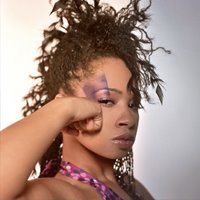
The last time I spoke with talented R&B singer/songwriter Melanie Durrant, it seemed like the stars were finally aligned, and she was ready to blow up. She was signed south of the border to legendary Motown Records and was opening for the likes of Sean Paul and Jay-Z, and all signs pointed to huge international success. But a year later, the spunky Toronto native finds herself without a major label deal (Motown dropped her and never did release her material) and is now back in Toronto with a new label (Koch), and a new independent album, Where I'm Going, set for release on October 27.
Durrant manages to keep things in perspective. Indeed, while the Canadian chanteuse's career begins to play out exactly as the lyrics to her ebullient breakout hit, "Where I'm Going" - "I'm going to get to where I'm going, slowly but surely" - Durrant takes it all in stride.
"I'm only human," the classy Durrant tells Pride News Magazine, in an exclusive telephone interview.
"I wasn't feeling too hot about not having my album released through Motown, but when you fall down, you've gotta dust yourself off and keep it moving. So that's what I've done."
The sparkling vocalist has had music on her mind since she was a small child. Her mother, Karen Durrant, is an established professional singer known for her uncanny impersonations of Tina Turner and Donna Summer.
Durrant fondly remembers singing along to the sheet music that her mother brought home. If the show wasn't in a bar, young Melanie would often watch her mother's performances.
The younger Durrant's style is a honey-dipped dash of R&B, a splash of alternative rock and roll, and a heaping helping of soul. Her singing/songwriting style is often referred to as "adventurous", as her musical influences run the gamut. The admittedly old school Durrant cites artists as diverse and eclectic as Stevie Wonder, Aerosmith and Diana Ross as influences. She describes her sound as "alternative hip hop soul".
But it's almost as if she's defying you to categorize her. Durrant has been best described as a mix of Blu Cantrell, Jill Scott and the late great Minnie Ripperton.
It all started, when, after honing her skills at Toronto's Earl Haig School of the Arts, and training at the Royal Conservatory of Music, Durrant began performing in underground spots across the country - such as Toronto's female Honey Jam talent showcase - which parlayed into a short stint in the Broadway production of "Rent".
It was there she met singer Jill Scott, who encouraged her to continue writing songs.
By now, the whirlwind story behind her signing to the legendary Motown USA label is the stuff of Canadian urban legend: After being introduced to Toronto urban music video director wunderkind X (then known as Little X), he promised her, if he ever directed a car commercial he'd use her song. Sure enough, X got the gig, and the aforementioned, "Where I'm Going" appeared on a PT Cruiser car commercial in 2002.
Motown prez Kedar Massenberg just happened to catch the commercial on television, and Durrant was flown out to New York and - bam - the budding songstress was on a star-studded Motown R&B roster that, among its notables, includes Brian McKnight, Erykah Badu and India.Arie.
Later, Durrant was dropped from the Motown label.
Undaunted by her music industry experiences, Durrant kept things moving. She continued to tour and record fresh material. Her manager (Taj Critchlow of Maxamus Entertainment) started his own label and eventually signed a distribution deal with Koch.
The new album, Where I'm Going, is a 14-track effort that combines tracks from the ill-fated Motown release, with new material. Most of the songs were recorded at downtown Toronto's Soundproof Studios, where Durrant ably nailed each song in one or two takes.
After the jazzy-hip hop brilliance that is the title track (featuring rapper Common), the rest of the album is solid. The "Kill Bill Vol. 1"-inspired cover of "Bang, Bang" (featuring the omnipresent Kardinal Offishall) is on point, as is the shiny happy pop-vibe of "Sky", and the dancehall-riff of "Let Me". Tracks like "Still the Same" and "Eddie" allow Durrant to demonstrate her range, as she invokes a more traditional R&B/soul flavour.
The reggae-vibe of "Same Ol' Thing" could have used a tad more production polish, but is probably the only blip on an otherwise strong project.
Durrant herself cites the acoustically-driven, multi-tracked, "Best Thing" (You're a million miles from me/High as the moon and deep as the sea), as her favorite track.
"It makes me feel really good, and I always get a warm reception from my audience when I'm singing that song," she says.
In some respect, releasing the album independently allows for more creative control, Durrant adds. "And the thing is, Motown promised me creative control, but they didn't deliver.
"But I don't want to focus on negative stuff. Through music, I've expressed my feelings, and I think it feels good to get it off my chest. I feel great right now."
The current Canadian urban music landscape, where artists like Jully Black and Divine Brown are getting mainstream love, bodes well for Durrant.
The timing is right and it's good to see these artists doing their thing, she notes.
All things considered, Durrant is all about leaving the past behind and moving forward.
"The good thing is that my album is coming out, I'm about to go on tour…things are good all across the board."
Wednesday, October 12, 2005
Lil' Kim's Naked Truth
By Ryan B. Patrick
(Oct 5, 2005)
Pride News Magazine
"With my back against the wall/I'm gonna bang my way out" - Lil' Kim
Despite her diminutive 4'11" frame, Lil' Kim is perhaps one of the biggest, most successful female rappers of all time. The fashionable, provocative and overtly sexual Lil' Kim aka Queen Bee is no stranger to controversy.
Last month saw the Grammy-winning Kim head to jail, after being found guilty on three perjury charges, and of conspiracy to commit perjury, for lying to a federal grand jury.
The incident in question was the 2001 gunfight involving the entourage of rap duo Capone 'N' Noreaga and her fierce hip hop rival Foxy Brown, outside the Hot 97 FM radio station offices in New York City. Kim was sentenced to a year and one day for lying at the trial for the shootout. She reported to a Philadelphia prison camp on September 19.
Yet, not even life in the Big House appears to be enough to hold the hip hop diva down.
The irony is that the recent release of her long-awaited fourth solo album, The Naked Truth, will, no doubt, experience stellar sales, even while she's incarcerated.
Kim even shot a reality show (tentatively titled, "Lil' Kim Goes to the Big House") based on her final weeks before she went to prison, and, according to the New York Times, her last weekend on the streets was spent shooting three music videos. She also went on a media blitz prior to her year-and-a-day-long "vacation", conducting media interviews with Newsweek, the New York Times, even recording a sit-down chat with VH1's Fab Five Freddy, for the recent VH1 Hip Hop Honors, which paid tribute to the Notorious B.I.G., among other legendary hip hop artists.
It's clear Kim's a shrewd businesswoman, milking her celebrity in her final days of freedom, instead of staying home sulking.
Yet, in the grand scheme of things, where does Lil' Kim rank as a musical artist?
Love her or hate her, there's no denying her impact. As a recording artist, her uninhibited and sexually-charged style of hip hop has, for better or for worse, forever changed the way we see female rappers.
She has been both admonished and adored for her hardcore lyrics. She has paved the way for other female rap artists such as Trina, Jacki-O and Terror Squad's Remy Ma, and the troubling subtext seems to be: for females to be successful, they need to be served up as eye candy, lyrical prowess be damned.
From her troubled childhood, to the murder of her mentor/lover Notorious B.I.G., to her current stint behind bars - Lil' Kim represents the quintessential hip hop bad girl.
Born Kimberly Denise Jones on July 11th, 1975, and raised in Brooklyn, New York, Kim was left under the care of her father after her parents got divorced when she was 9 years old.
A defiant child, living under the strict rules of her father, she eventually ran away from home.
As the story goes, Kim crashed on friends' couches, lived with drug-dealing boyfriends, and even endured a brief stint as a prostitute.
But after meeting up with mentor and father figure, Christopher Wallace - better known as Biggie Smalls and Notorious B.I.G - Jones commenced to turn her life around.
B.I.G. had just signed a record deal with Sean "Diddy" Combs' Bad Boy Records and wanted to bring her in on his success.
It was Wallace who encouraged her to hone her now trademark rapping skills and set her up as a member of the rap group Junior M.A.F.I.A.
After some initial success with the group (including Top 20 singles, "Playa'z Anthem" and "Get Money") in 1996, Lil' Kim went the solo route and released her controversial debut album, Hard Core.
It was a huge commercial success, but drew heavy criticism for its hardcore, explicit content and the sexy album cover, a first for a female rapper.
Buoyed by the infamous "coming soon" poster (featuring Kim provocatively posed in a spread-eagle squatting position) the album went double platinum and featured Billboard Hot 100 hits such as the album's first single, "No Time" (featuring Diddy), "Crush on You" and "Not Tonight".
Kim's career took a turn when, in the spring of 1997, Notorious B.I.G. was murdered.
She made it known she and Biggie had been in love, and was visibly emotional at his funeral. It's been suggested it was Biggie's death that precipitated Kim's 2000 transformation from an attractive dark-skinned Black woman to a virtual Barbie doll, complete with breast enhancements, omnipresent blonde-coloured weave and plastic surgery and makeup, making her look decidedly Eurocentric.
It is hardly coincidence her new look has corresponded with her growing mainstream popularity, which seemed to blossom at the same time her album, The Notorious K.I.M., went platinum and she had scored a huge hit with 2001's remake of LaBelle's "Lady Marmalade", on which she teamed with Christina Aguilera, Mya and Pink.
The Naked Truth features a racially ambiguous Lil' Kim on its cover, warranting a double take: her skin has been lightened, her pink lipsticked lips in a perpetual China Doll pout, and her trademark blonde hair (weave) seems straighter than ever.
Potential self-hate imagery aside, The Naked Truth definitely sounds like something that was rushed, which it in fact it was, as Jones completed it weeks before her lock-up.
Kim herself admitted, before going off to prison, that this was "the shortest time she worked on a record".
Far from a flop and not quite a classic, the 21-track release, nonetheless, sees Lil Kim near the top of her game. Those expecting to hear a mea culpa in The Naked Truth will instead be treated to a bric-a-brac of glossy pop-rap production, brazen gangsta chatter and the requisite sexy rhymes and dirty talk.
It appears that the raw emotion displayed on this album can be directly attributed to Lil' Kim's incarceration and the fact that she minimizes the party tracks in favour of solid beats and a career-defining opus.
She spouts off on the perils of fame, jealousy and the legal system. The guest stars (T.I., Twista, Snoop Dogg) are kept to a minimum - this is Kim's show.
The obligatory "leave me alone" track, the scathing "Shut Up B--h!", was a middling first single. Yet, she redeems herself (and also demonstrates her range) on the Caribbean-flavoured, Scott Storch-produced, "Lighters Up", where, in-between rousing rhythms and a beaming pride for her hometown Brooklyn, she almost sounds like a bootleg Lauryn Hill.
The island vibe is revisited on "Durty", where Kim bigs up Brooklyn's strong Jamaican presence against a Terrance "Hot Runner" Lovelace's dancehall riddem.
The album falters a bit on tracks such as the unabashed raw sexual energy exhibited on the raunchy, "Kitty Box" (produced by 7 Aurelius), which leaves nothing to the imagination.
She quickly recovers, demonstrating on several tracks why she's known for her lyrical skills, as she practically eviscerates rivals, including 50 Cent ("Spellcheck") and former crew Junior M.A.F.I.A. ("Whoa" and "Last Day"). She saves some extra venom for Foxy Brown on "Quiet", featuring The Game, rapping: "Comin' at me b--h/You're playin' with fire/I ain't gon' come back at you, I'm comin' atcha ghostwriter".
The capper is the final track, "Last Day", where the Queen Bee delivers a heartfelt "I won't give up hope" performance, with lyrics that sound like they were lifted from her diary.
Overall, The Naked Truth is just that, and its solid and authentic New York hip hop production ensures Kim will still be remembered while she's away.
This time next year, she will be out, and it remains to be seen what kind of hip hop world the Queen Bee will be returning home to.
Indeed, before heading to jail, Kim assured family and fans she would be alright, saying, "Today begins a new saga in my life, which I expect to strengthen me and allow me time for reflection. I am blessed to have so many great things in my life - family, friends and God.
"All will be in my thoughts daily. I plan to write music while in prison, read and pray regularly, and will come out a stronger, more confident woman."
(Oct 5, 2005)
Pride News Magazine
"With my back against the wall/I'm gonna bang my way out" - Lil' Kim
Despite her diminutive 4'11" frame, Lil' Kim is perhaps one of the biggest, most successful female rappers of all time. The fashionable, provocative and overtly sexual Lil' Kim aka Queen Bee is no stranger to controversy.
Last month saw the Grammy-winning Kim head to jail, after being found guilty on three perjury charges, and of conspiracy to commit perjury, for lying to a federal grand jury.
The incident in question was the 2001 gunfight involving the entourage of rap duo Capone 'N' Noreaga and her fierce hip hop rival Foxy Brown, outside the Hot 97 FM radio station offices in New York City. Kim was sentenced to a year and one day for lying at the trial for the shootout. She reported to a Philadelphia prison camp on September 19.
Yet, not even life in the Big House appears to be enough to hold the hip hop diva down.
The irony is that the recent release of her long-awaited fourth solo album, The Naked Truth, will, no doubt, experience stellar sales, even while she's incarcerated.
Kim even shot a reality show (tentatively titled, "Lil' Kim Goes to the Big House") based on her final weeks before she went to prison, and, according to the New York Times, her last weekend on the streets was spent shooting three music videos. She also went on a media blitz prior to her year-and-a-day-long "vacation", conducting media interviews with Newsweek, the New York Times, even recording a sit-down chat with VH1's Fab Five Freddy, for the recent VH1 Hip Hop Honors, which paid tribute to the Notorious B.I.G., among other legendary hip hop artists.
It's clear Kim's a shrewd businesswoman, milking her celebrity in her final days of freedom, instead of staying home sulking.
Yet, in the grand scheme of things, where does Lil' Kim rank as a musical artist?
Love her or hate her, there's no denying her impact. As a recording artist, her uninhibited and sexually-charged style of hip hop has, for better or for worse, forever changed the way we see female rappers.
She has been both admonished and adored for her hardcore lyrics. She has paved the way for other female rap artists such as Trina, Jacki-O and Terror Squad's Remy Ma, and the troubling subtext seems to be: for females to be successful, they need to be served up as eye candy, lyrical prowess be damned.
From her troubled childhood, to the murder of her mentor/lover Notorious B.I.G., to her current stint behind bars - Lil' Kim represents the quintessential hip hop bad girl.
Born Kimberly Denise Jones on July 11th, 1975, and raised in Brooklyn, New York, Kim was left under the care of her father after her parents got divorced when she was 9 years old.
A defiant child, living under the strict rules of her father, she eventually ran away from home.
As the story goes, Kim crashed on friends' couches, lived with drug-dealing boyfriends, and even endured a brief stint as a prostitute.
But after meeting up with mentor and father figure, Christopher Wallace - better known as Biggie Smalls and Notorious B.I.G - Jones commenced to turn her life around.
B.I.G. had just signed a record deal with Sean "Diddy" Combs' Bad Boy Records and wanted to bring her in on his success.
It was Wallace who encouraged her to hone her now trademark rapping skills and set her up as a member of the rap group Junior M.A.F.I.A.
After some initial success with the group (including Top 20 singles, "Playa'z Anthem" and "Get Money") in 1996, Lil' Kim went the solo route and released her controversial debut album, Hard Core.
It was a huge commercial success, but drew heavy criticism for its hardcore, explicit content and the sexy album cover, a first for a female rapper.
Buoyed by the infamous "coming soon" poster (featuring Kim provocatively posed in a spread-eagle squatting position) the album went double platinum and featured Billboard Hot 100 hits such as the album's first single, "No Time" (featuring Diddy), "Crush on You" and "Not Tonight".
Kim's career took a turn when, in the spring of 1997, Notorious B.I.G. was murdered.
She made it known she and Biggie had been in love, and was visibly emotional at his funeral. It's been suggested it was Biggie's death that precipitated Kim's 2000 transformation from an attractive dark-skinned Black woman to a virtual Barbie doll, complete with breast enhancements, omnipresent blonde-coloured weave and plastic surgery and makeup, making her look decidedly Eurocentric.
It is hardly coincidence her new look has corresponded with her growing mainstream popularity, which seemed to blossom at the same time her album, The Notorious K.I.M., went platinum and she had scored a huge hit with 2001's remake of LaBelle's "Lady Marmalade", on which she teamed with Christina Aguilera, Mya and Pink.
The Naked Truth features a racially ambiguous Lil' Kim on its cover, warranting a double take: her skin has been lightened, her pink lipsticked lips in a perpetual China Doll pout, and her trademark blonde hair (weave) seems straighter than ever.
Potential self-hate imagery aside, The Naked Truth definitely sounds like something that was rushed, which it in fact it was, as Jones completed it weeks before her lock-up.
Kim herself admitted, before going off to prison, that this was "the shortest time she worked on a record".
Far from a flop and not quite a classic, the 21-track release, nonetheless, sees Lil Kim near the top of her game. Those expecting to hear a mea culpa in The Naked Truth will instead be treated to a bric-a-brac of glossy pop-rap production, brazen gangsta chatter and the requisite sexy rhymes and dirty talk.
It appears that the raw emotion displayed on this album can be directly attributed to Lil' Kim's incarceration and the fact that she minimizes the party tracks in favour of solid beats and a career-defining opus.
She spouts off on the perils of fame, jealousy and the legal system. The guest stars (T.I., Twista, Snoop Dogg) are kept to a minimum - this is Kim's show.
The obligatory "leave me alone" track, the scathing "Shut Up B--h!", was a middling first single. Yet, she redeems herself (and also demonstrates her range) on the Caribbean-flavoured, Scott Storch-produced, "Lighters Up", where, in-between rousing rhythms and a beaming pride for her hometown Brooklyn, she almost sounds like a bootleg Lauryn Hill.
The island vibe is revisited on "Durty", where Kim bigs up Brooklyn's strong Jamaican presence against a Terrance "Hot Runner" Lovelace's dancehall riddem.
The album falters a bit on tracks such as the unabashed raw sexual energy exhibited on the raunchy, "Kitty Box" (produced by 7 Aurelius), which leaves nothing to the imagination.
She quickly recovers, demonstrating on several tracks why she's known for her lyrical skills, as she practically eviscerates rivals, including 50 Cent ("Spellcheck") and former crew Junior M.A.F.I.A. ("Whoa" and "Last Day"). She saves some extra venom for Foxy Brown on "Quiet", featuring The Game, rapping: "Comin' at me b--h/You're playin' with fire/I ain't gon' come back at you, I'm comin' atcha ghostwriter".
The capper is the final track, "Last Day", where the Queen Bee delivers a heartfelt "I won't give up hope" performance, with lyrics that sound like they were lifted from her diary.
Overall, The Naked Truth is just that, and its solid and authentic New York hip hop production ensures Kim will still be remembered while she's away.
This time next year, she will be out, and it remains to be seen what kind of hip hop world the Queen Bee will be returning home to.
Indeed, before heading to jail, Kim assured family and fans she would be alright, saying, "Today begins a new saga in my life, which I expect to strengthen me and allow me time for reflection. I am blessed to have so many great things in my life - family, friends and God.
"All will be in my thoughts daily. I plan to write music while in prison, read and pray regularly, and will come out a stronger, more confident woman."
Thursday, September 08, 2005
TUMF 2005
Divine Old School Rocks The Toronto Urban Music Festival
By Ryan B. Patrick
Pride Entertainment Writer
Pride News
September 7, 2005
For the first time in the history of the nine-year-old event, it was a Canadian who headlined the Toronto Urban Music Festival (TUMF) at the Canadian National Exhibition (CNE) last weekend.
Past headliners for the TUMF have included rapper Mos Def and soul songstress Jill Scott, so for Toronto's own Divine Brown to be on top of the bill, that included American singer Jaguar Wright, was a huge deal.
"It's great to be able to play in front of my people," says the talented Brown.
It appears Brown's time is now, and judging from the crowd response, she is a hometown hero made good.
At TUMF, she performed cuts off her self-titled debut disc that has been getting local and national recognition off the strength of her throwback track, "Old School Love".
And after only a few months in release, the disc is on its way to going gold in Canada and is already a fixture on the Soundscan Top 50 sales chart.
Brown's apparent "overnight success" has actually been almost a decade in the making.
Formerly known as Divine Earth Essence, Brown (who has a five-octave vocal range) has been a longtime fixture in the Toronto nightclub scene and recently completed a stint in the hit musical Ain't Misbehavin', co-starring the legendary Jackie Richardson.
Brown's appeal has been strengthened by her captivating live performances, and, this past weekend, she didn't disappoint.
Joints like, "Twist My Hair", "Something 'Bout You", "Single Momma", and current second single, "U Shook Me", showcased Brown's polished sound and flair, and served as an excellent reason why her album will make her a surefire Juno Award nominee.
Brown's closing performance capped off a day that included other emerging African Canadian acts.
Former "Canadian Idol" contestant Jermain Maxwell performed a short set of songs off his recently-launched R&B/soul project titled, Longtime.
The first single of the same name can be heard on FLOW 93.5 FM.
Compared to a "young black Cyndi Lauper" by rapper/producer Saukrates, newcomer Andreena Mills rocked out with a lively collection of songs from her upcoming album.
Signed to Capitol Hill Management (Jully Black, Saukrates, Kardinal Offishall and Glenn Lewis), Mills has the charisma and stage presence to make waves in the very near future.
Montreal-based hip hoppers The Butta Babees (MC/producers Manchilde and Zip Loks) attempted to inject some life into the show with their unique brand of hip hop.
The Butta Babees sound is best described as positive, feel-good hip hop. The duo did songs from their Urbanelo album.
Philly-based singer/songwriter Jaguar Wright almost stole the show with a dazzling set, and scored some points with the crowd to boot.
"People say I'm insane because I'm a Black woman with a brain," Wright says. She railed against an image-conscious and sexed-up industry, much to the delight of the audience.
Best known for her Coca Cola commercial a few years back, Wright threw down with cuts off her new album, Divorcing Neo 2 Marry Soul.
Yet, the night truly belonged to Divine Brown.
Although her performance had to be cut short due to time constraints, Brown proved the time is now for Canadian urban artists.
Last week, TUMF also held its annual Toronto Urban Music Conference.
Held at Hart House, at the University of Toronto, music industry experts discussed important issues concerning Canada's urban music industry.
This year the conference featured panels on music publishing, how to network and how to obtain funding for projects.
The keynote speaker was hip hop historian Jeff Chang, whose critically acclaimed (and recent American Book Award-winner) Hip Hop 101 history book, Can't Stop Won't Stop: A History of the Hip Hop Generation outlines the roots of the genre.
Chang did his research in looking at the roots of the genre (from its Jamaican roots in the late 1960s, to its birth in the Bronx) - and it showed. He eloquently explained how hip hop got to be the global juggernaut it is today.
He reminds us that, even in its current "bling bling" incarnation, hip hop is not dead; rather it's been split in two.
Chang argues that you have the glossy, poppy, highly-materialistic and commoditized "50 Cent" version of hip hop, then you have the "real" underground hip hop, which consists of positive, conscious, and also traditional hip hop elements, such as b-boys and b-girls.
The problem, Chang says, is that mainstream hip hop has been hijacked and is now controlled by corporate interests, which pump money into artists they feel will sell to the masses.
All other subsets of hip hop get pushed to the fringes, leaving a popular (but erroneous) perception that hip hop is all about gangbanging and misogyny.
Hip hop is also cyclical, Chang says, and it reinvents itself every four to six years.
He concludes: the "trinity of hip hop music" (Grandmaster Flash, Afrika Bambaataa, and DJ Kool Herc) don't get the props they deserve for creating the music so many love today.
By Ryan B. Patrick
Pride Entertainment Writer
Pride News
September 7, 2005
For the first time in the history of the nine-year-old event, it was a Canadian who headlined the Toronto Urban Music Festival (TUMF) at the Canadian National Exhibition (CNE) last weekend.
Past headliners for the TUMF have included rapper Mos Def and soul songstress Jill Scott, so for Toronto's own Divine Brown to be on top of the bill, that included American singer Jaguar Wright, was a huge deal.
"It's great to be able to play in front of my people," says the talented Brown.
It appears Brown's time is now, and judging from the crowd response, she is a hometown hero made good.
At TUMF, she performed cuts off her self-titled debut disc that has been getting local and national recognition off the strength of her throwback track, "Old School Love".
And after only a few months in release, the disc is on its way to going gold in Canada and is already a fixture on the Soundscan Top 50 sales chart.
Brown's apparent "overnight success" has actually been almost a decade in the making.
Formerly known as Divine Earth Essence, Brown (who has a five-octave vocal range) has been a longtime fixture in the Toronto nightclub scene and recently completed a stint in the hit musical Ain't Misbehavin', co-starring the legendary Jackie Richardson.
Brown's appeal has been strengthened by her captivating live performances, and, this past weekend, she didn't disappoint.
Joints like, "Twist My Hair", "Something 'Bout You", "Single Momma", and current second single, "U Shook Me", showcased Brown's polished sound and flair, and served as an excellent reason why her album will make her a surefire Juno Award nominee.
Brown's closing performance capped off a day that included other emerging African Canadian acts.
Former "Canadian Idol" contestant Jermain Maxwell performed a short set of songs off his recently-launched R&B/soul project titled, Longtime.
The first single of the same name can be heard on FLOW 93.5 FM.
Compared to a "young black Cyndi Lauper" by rapper/producer Saukrates, newcomer Andreena Mills rocked out with a lively collection of songs from her upcoming album.
Signed to Capitol Hill Management (Jully Black, Saukrates, Kardinal Offishall and Glenn Lewis), Mills has the charisma and stage presence to make waves in the very near future.
Montreal-based hip hoppers The Butta Babees (MC/producers Manchilde and Zip Loks) attempted to inject some life into the show with their unique brand of hip hop.
The Butta Babees sound is best described as positive, feel-good hip hop. The duo did songs from their Urbanelo album.
Philly-based singer/songwriter Jaguar Wright almost stole the show with a dazzling set, and scored some points with the crowd to boot.
"People say I'm insane because I'm a Black woman with a brain," Wright says. She railed against an image-conscious and sexed-up industry, much to the delight of the audience.
Best known for her Coca Cola commercial a few years back, Wright threw down with cuts off her new album, Divorcing Neo 2 Marry Soul.
Yet, the night truly belonged to Divine Brown.
Although her performance had to be cut short due to time constraints, Brown proved the time is now for Canadian urban artists.
Last week, TUMF also held its annual Toronto Urban Music Conference.
Held at Hart House, at the University of Toronto, music industry experts discussed important issues concerning Canada's urban music industry.
This year the conference featured panels on music publishing, how to network and how to obtain funding for projects.
The keynote speaker was hip hop historian Jeff Chang, whose critically acclaimed (and recent American Book Award-winner) Hip Hop 101 history book, Can't Stop Won't Stop: A History of the Hip Hop Generation outlines the roots of the genre.
Chang did his research in looking at the roots of the genre (from its Jamaican roots in the late 1960s, to its birth in the Bronx) - and it showed. He eloquently explained how hip hop got to be the global juggernaut it is today.
He reminds us that, even in its current "bling bling" incarnation, hip hop is not dead; rather it's been split in two.
Chang argues that you have the glossy, poppy, highly-materialistic and commoditized "50 Cent" version of hip hop, then you have the "real" underground hip hop, which consists of positive, conscious, and also traditional hip hop elements, such as b-boys and b-girls.
The problem, Chang says, is that mainstream hip hop has been hijacked and is now controlled by corporate interests, which pump money into artists they feel will sell to the masses.
All other subsets of hip hop get pushed to the fringes, leaving a popular (but erroneous) perception that hip hop is all about gangbanging and misogyny.
Hip hop is also cyclical, Chang says, and it reinvents itself every four to six years.
He concludes: the "trinity of hip hop music" (Grandmaster Flash, Afrika Bambaataa, and DJ Kool Herc) don't get the props they deserve for creating the music so many love today.
Tuesday, August 30, 2005
the return

Haven't posted in a minute. This will change. I liked how my recent interview with Wes "Maestro" Williams turned out so here it is in all it's glory:
Wes "Maestro" Williams: Still Conducting Thangs
By Ryan B. Patrick
Pride Entertainment Writer
www.pridenewsmagazine.com
Wed Aug 24 2005
At this stage in his hip hop career, Wes "Maestro" Williams is not only still conducting thangs, he's doing so on his own terms.
Considering all that Williams has accomplished, he's definitely earned that right.
Evidenced by the fact Canada's pioneering rapper hardly goes by "Fresh Wes" anymore, Williams has evolved from being just a talented emcee into a talented actor with two hit television series on the go.
It's hard to believe that it's been more than 15 years since Maestro (then known as Maestro Fresh Wes) made Canadian history, with the now-classic hip hop single and video, "Let Your Backbone Slide".
To this day, that song is still the largest-selling Canadian hip hop track, and ranks in the top 15 of the best Canadian songs ever released. Maestro's platinum-selling Symphony In Effect debut album is still the biggest-selling urban music album in Canadian music history. On top of that, Williams is also the first Canadian urban music artist to release five albums: Symphony In Effect (1990), Black Tie Affair (1991), Naaah, Dis Kid Can't Be From Canada?!! (1994), Built To Last (1998) and Ever Since (2000).
His achievements forced the Canadian music industry to stand up and take notice, with the implementation of a Hip hop/Rap Category in the Juno Music Awards, where he's been nominated 11 times, twice for Vocalist of the Year.
Other honours presented to Maestro include a Harry Jerome Award from the Black Business and Professionals Association; two Toronto Music Awards; and four MuchMusic Awards.
Simply put, Williams is the godfather of Canadian hip hop.
To celebrate and document his accomplishments, he's released the appropriately titled, Urban Landmark-1989-2005, which hit stores August 23.
The greatest hits album (featuring hits such as "Conducting Thangs", "Let Your Backbone Slide", classic B-sides, and five new tracks) is being touted as his final album, with the first single (a hip hop mix of Gowan's 1985 hit "Criminal Mind") already in rotation on MuchMusic.
Even though he's releasing a retrospective album, don't expect Williams to be resting on his hip hop laurels. "This is a good project to release - a retrospective - because it's been 20 years," the hip hop icon tells Pride News Magazine, over the phone from his Toronto home. "But I think it could be a crutch for me if I lie on my laurels and think about stuff that I've done before. If I have that mentality, it's a stagnant mentality."
Just as Canadian rock music has its history well documented, Williams feels it is time for Canadian hip hop culture to be recognized in much the same fashion.
"Ain't nobody sold more records than me, and it's been a decade and a half. That's something that should be documented," Williams says matter-of-factly.
"My new album symbolizes a substantial part of Canadian music history."
In terms of the future of Canadian urban music, Williams is content to take a back seat to the emerging players in the hip hop scene.
"I'm proud of these cats. I'm a big fan of k-os, a big fan of Kardinal [Offishall0. I feel good that I can buy Canadian [hip hop] records. That's a dope thing," Williams says.
Yet, even he is willing to acknowledge there may never be another Canadian hip hop artist to make the same sales and historical impact in the game he did.
"Right now, there are artists who are way more talented than me, but it's a different time, a different era. When I was around, the internet wasn't even out yet. In terms of sales and in terms of impact, I don't know if it's going to happen," he notes, "but I think that there's a lot more talent out there, and that's the main thing."
Evolution is the name of Maestro's game, and right now, he's looking to establish himself as an actor.
In the past few years, he's appeared in many TV and film projects, including: playing Tony Bogard in the Golden Globe-nominated film, Redemption; starring in The Stan "Tookie" Williams Story, which also starred recent Oscar winner Jamie Foxx.
Maestro was also featured in the Showtime series "Soulfood", and makes an appearance in John Singleton's recently-released film Four Brothers.
On the small screen, he can be found starring as nightclub owner Quincy Daniels on the television series "Metropia" (Omni TV) and also on CTV's "Instant Star", playing music mogul/manager Darius Mills.
Both series are in their second seasons, and "Instant Star" was recently picked up by US television network Nickelodeon. It's an accomplishment Williams doesn't take lightly.
"How many Black Canadian actors are on two television series at the same time?" he says, adding that there are both similarities and differences in the acting and music worlds.
"They're similar. The work ethic is very important. In other words, if you want to be a great emcee, you got to do certain things. I gotta work at it, and it's the same thing with acting. I'm among thespians, and I've got to be sharp with what I'm doing. Anything you want to be good at, you've got to work at," Williams says.
Although he doesn't go by his old "Fresh Wes" hip hop moniker anymore, Williams is still fresh; while Urban Landmark is supposed to be his last album - a swan song of sorts - he isn't going away anytime soon.
"I'm looking to grow as a multimedia artist," the artiste says. "Right now, I'm not really stressing music like that as an artist.
"In other words, it's not my main focus."
As an elder statesman of Canadian hip hop, Williams is more than willing to be a mentor of sorts to up-and-coming urban music artists, helping them hone their craft.
"I'll always make music and be involved in music in some capacity," he says, "but I'm more looking at assisting the industry, right now, and being an asset that way."
Saturday, June 04, 2005
Ebonnie Rowe: Driven
EBONNIE ROWE: DRIVEN
By Ryan B. Patrick
Pride Entertainment Writer
www.pridenewsmagazine.com
(June 1, 2005)
Those who have worked with African Canadian businesswoman Ebonnie Rowe are well aware she is driven - even without a driver's license.
"I never learned to drive," the affable Rowe tells Pride News Magazine, with a laugh. "I could never commit because these things took precedence."
"These things" include creating a youth mentorship program and being the brains behind the annual Honey Jam all-female music showcase. Rowe, daughter of the late Barbadian diplomat Owen Rowe and the youngest of three children, is a perfectionist at heart and only knows how to do things one way - with 100 percent effort.
It is this effort that was recognized at the YWCA Toronto's Women of Distinction awards show held May 31 at the Metro Toronto Convention Centre. Rowe was this year's award recipient in the Arts & Entertainment category. The prestigious award (now in it's 25th year) is presented annually by YWCA Toronto to identify and honour seven women and one young woman who have made amazing contributions to improving the lives of other Canadian women.
To be a recipient during the 25th year was an even bigger deal, and Rowe says, "I'm happy, honoured and humbled." The fact that Rowe's mentor - the late African Canadian entrepreneur Beverly Mascoll - was also a recipient of the award makes the award that much more special. She says, "It means a lot to me."
No stranger to community involvement, in 1992, Rowe and two partners kicked off Each One, Teach One, a mentoring program to offer African Canadian youth examples of thriving Black role models. The initiative links youth with professionals working in various trades and occupations and has inspired hundreds of Black youth to chase their dreams.Things started with Each One Teach One and built from there, Rowe says, adding, it was the untimely passing of two close friends that prompted Rowe to start the program.
It was also at this time that she changed her name from Bonnie, adding an "E", to spell Ebonnie, as a sign of support for Black culture. "I was feeling this need to hurry up and do something purposeful. I was very aware of mortality and wanted to leave something behind, a legacy," she says.
"Starting with the [Each One Teach One] program, the ideas succeeded and people really gravitated towards it. The momentum builds, and you become energized by that, and you start thinking about other natural things to start doing; things snowballed from there."
Rowe is probably best known as founder and CEO of PhemPhat Productions.
Launched a decade ago, PhemPhat is a production company designed to offer Canadian female artists a viable outlet to develop and hone their craft, not merely as artists, but also as managers, label owners and promoters.
Rowe has said PhemPhat was borne of the frustration with Canada's male-dominated music industry, a lifeline of sorts for talented female artists who were being dismissed, disrespected and disenfranchised by the system, and who were without a viable outlet for their craft.
Indeed, Rowe has been outspoken about calling out the music industry on its misogyny and less-than-stellar treatment of women.
To showcase the fact that females are far more than highly-objectified "bootyshakers", throughout the years, the urban company has produced a series of events to display women artists: an Urban Music Seminar, the Brown Girls in Da Ring poetry/spoken word event, a Women on Wax DJ series, and of course, the uber-popular Honey Jam, a platform/showcase for up and coming female artists.
Artists who have benefited from the exposure gained from Honey Jam events include Toronto's Jully Black and Grammy winner Nelly Furtado. PhemPhat also produces the annual Honey Jam Magazine, and in 2002, hooked up with record label Universal Music to produce Honey Drops, Canada's first all-female urban CD compilation.
Rowe is currently hard at work for the 10th anniversary Honey Jam show, taking place this summer.
"It's only as I prepare the 10th anniversary [of Honey Jam] and look back through the old photographs, that's when I get a sense of how much we've done. It's overwhelming."
For all of her work and accomplishments, the accolades have come fast and furious.
Rowe's been profiled in Who's Who in Black Canada, Chatelaine's Who's Who of Canadian Women, and she's received the Toronto Sun Woman on the Move Award.
Her achievements have also garnered numerous awards, including the Urban Music Association of Canada's Special Achievement Award in 2000, and the Volunteerism Award from the Province of Ontario in 1997.
What people don't realize is Rowe has accomplished all this while maintaining a full-time job as a legal secretary.
A lot of people have wrongly assumed Honey Jam was the only thing on her plate, Rowe says, but, between Each One Teach One, PhemPhat, organizing meetings, music release parties and seminars, "I was running on adrenaline", Rowe says, and it was taking a toll on her physical and spiritual being.
In fact, in 1999, Rowe announced her "retirement" from putting together Honey Jam; even that was fleeting. "They pulled me back in," Rowe says of the musicians and industry people who didn't want her to give up on the show. She returned a year later.
"I didn't realize how much it meant to everyone. I can't abandon it. When…I look back, at the press clippings, the photos, the videos, I do think that it's been something."
Yet Rowe isn't content to sit back and bask in the glow.
Currently single, Rowe says she's often too busy to sit back and reflect.
"I'm so insanely busy I don't really think about it," she says with a laugh, "but when people write to me, that's when I think, 'Wow, this really meant something to someone'."
Yet, it was the recent and unfortunate passing of her father that has put life in a different perspective for Ms. Rowe. (Mr. Rowe - who was well-known and respected in the African Canadian community - passed away in April, after a long and courageous battle with cancer.) It just heightens the idea of living out loud now, she says.
And, she adds, "The slowing down is a process." "Sometimes it's difficult for me to quiet my mind because, even though I'm focused on the Honey Jam, my body is telling me to slow down."
But Rowe can't stop.
In the works right now are plans to expand Honey Jam into television, opening a PhemPhat clothing line, and she is also excitedly looking at the prospects of organizing a music festival in the Caribbean.
"I feel that I can die today and be happy with what I've contributed to society," Rowe says.
"But I really don't feel that I've scratched the surface in terms of what I can do."
By Ryan B. Patrick
Pride Entertainment Writer
www.pridenewsmagazine.com
(June 1, 2005)
Those who have worked with African Canadian businesswoman Ebonnie Rowe are well aware she is driven - even without a driver's license.
"I never learned to drive," the affable Rowe tells Pride News Magazine, with a laugh. "I could never commit because these things took precedence."
"These things" include creating a youth mentorship program and being the brains behind the annual Honey Jam all-female music showcase. Rowe, daughter of the late Barbadian diplomat Owen Rowe and the youngest of three children, is a perfectionist at heart and only knows how to do things one way - with 100 percent effort.
It is this effort that was recognized at the YWCA Toronto's Women of Distinction awards show held May 31 at the Metro Toronto Convention Centre. Rowe was this year's award recipient in the Arts & Entertainment category. The prestigious award (now in it's 25th year) is presented annually by YWCA Toronto to identify and honour seven women and one young woman who have made amazing contributions to improving the lives of other Canadian women.
To be a recipient during the 25th year was an even bigger deal, and Rowe says, "I'm happy, honoured and humbled." The fact that Rowe's mentor - the late African Canadian entrepreneur Beverly Mascoll - was also a recipient of the award makes the award that much more special. She says, "It means a lot to me."
No stranger to community involvement, in 1992, Rowe and two partners kicked off Each One, Teach One, a mentoring program to offer African Canadian youth examples of thriving Black role models. The initiative links youth with professionals working in various trades and occupations and has inspired hundreds of Black youth to chase their dreams.Things started with Each One Teach One and built from there, Rowe says, adding, it was the untimely passing of two close friends that prompted Rowe to start the program.
It was also at this time that she changed her name from Bonnie, adding an "E", to spell Ebonnie, as a sign of support for Black culture. "I was feeling this need to hurry up and do something purposeful. I was very aware of mortality and wanted to leave something behind, a legacy," she says.
"Starting with the [Each One Teach One] program, the ideas succeeded and people really gravitated towards it. The momentum builds, and you become energized by that, and you start thinking about other natural things to start doing; things snowballed from there."
Rowe is probably best known as founder and CEO of PhemPhat Productions.
Launched a decade ago, PhemPhat is a production company designed to offer Canadian female artists a viable outlet to develop and hone their craft, not merely as artists, but also as managers, label owners and promoters.
Rowe has said PhemPhat was borne of the frustration with Canada's male-dominated music industry, a lifeline of sorts for talented female artists who were being dismissed, disrespected and disenfranchised by the system, and who were without a viable outlet for their craft.
Indeed, Rowe has been outspoken about calling out the music industry on its misogyny and less-than-stellar treatment of women.
To showcase the fact that females are far more than highly-objectified "bootyshakers", throughout the years, the urban company has produced a series of events to display women artists: an Urban Music Seminar, the Brown Girls in Da Ring poetry/spoken word event, a Women on Wax DJ series, and of course, the uber-popular Honey Jam, a platform/showcase for up and coming female artists.
Artists who have benefited from the exposure gained from Honey Jam events include Toronto's Jully Black and Grammy winner Nelly Furtado. PhemPhat also produces the annual Honey Jam Magazine, and in 2002, hooked up with record label Universal Music to produce Honey Drops, Canada's first all-female urban CD compilation.
Rowe is currently hard at work for the 10th anniversary Honey Jam show, taking place this summer.
"It's only as I prepare the 10th anniversary [of Honey Jam] and look back through the old photographs, that's when I get a sense of how much we've done. It's overwhelming."
For all of her work and accomplishments, the accolades have come fast and furious.
Rowe's been profiled in Who's Who in Black Canada, Chatelaine's Who's Who of Canadian Women, and she's received the Toronto Sun Woman on the Move Award.
Her achievements have also garnered numerous awards, including the Urban Music Association of Canada's Special Achievement Award in 2000, and the Volunteerism Award from the Province of Ontario in 1997.
What people don't realize is Rowe has accomplished all this while maintaining a full-time job as a legal secretary.
A lot of people have wrongly assumed Honey Jam was the only thing on her plate, Rowe says, but, between Each One Teach One, PhemPhat, organizing meetings, music release parties and seminars, "I was running on adrenaline", Rowe says, and it was taking a toll on her physical and spiritual being.
In fact, in 1999, Rowe announced her "retirement" from putting together Honey Jam; even that was fleeting. "They pulled me back in," Rowe says of the musicians and industry people who didn't want her to give up on the show. She returned a year later.
"I didn't realize how much it meant to everyone. I can't abandon it. When…I look back, at the press clippings, the photos, the videos, I do think that it's been something."
Yet Rowe isn't content to sit back and bask in the glow.
Currently single, Rowe says she's often too busy to sit back and reflect.
"I'm so insanely busy I don't really think about it," she says with a laugh, "but when people write to me, that's when I think, 'Wow, this really meant something to someone'."
Yet, it was the recent and unfortunate passing of her father that has put life in a different perspective for Ms. Rowe. (Mr. Rowe - who was well-known and respected in the African Canadian community - passed away in April, after a long and courageous battle with cancer.) It just heightens the idea of living out loud now, she says.
And, she adds, "The slowing down is a process." "Sometimes it's difficult for me to quiet my mind because, even though I'm focused on the Honey Jam, my body is telling me to slow down."
But Rowe can't stop.
In the works right now are plans to expand Honey Jam into television, opening a PhemPhat clothing line, and she is also excitedly looking at the prospects of organizing a music festival in the Caribbean.
"I feel that I can die today and be happy with what I've contributed to society," Rowe says.
"But I really don't feel that I've scratched the surface in terms of what I can do."
Common "Be" music review
Common
Be
Geffen/Universal

After pushing hip-hop’s boundaries on the psychedelic and poorly received Electric Circus, Chi-town’s own Common hooks up with super-producer Kanye West on what is surely an album of the year candidate. Short but sweet (only 11 tracks), Common hits the ground running with “The Corner (featuring The Last Poets) and things only get better from there. To borrow words from comedian Dave Chappelle, Com spits hot fire on joints “The Food,” “Testify” and the epic “It’s Your World.” Even John Legend joins in on the fun with the soulful “Faithful” and “They Say.” Common’s lyrical dexterity combined with West’s signature production is a surefire win. Be serves to remind us that hip-hop can be witty, intelligent, mature and commercial all over again.
Be
Geffen/Universal
After pushing hip-hop’s boundaries on the psychedelic and poorly received Electric Circus, Chi-town’s own Common hooks up with super-producer Kanye West on what is surely an album of the year candidate. Short but sweet (only 11 tracks), Common hits the ground running with “The Corner (featuring The Last Poets) and things only get better from there. To borrow words from comedian Dave Chappelle, Com spits hot fire on joints “The Food,” “Testify” and the epic “It’s Your World.” Even John Legend joins in on the fun with the soulful “Faithful” and “They Say.” Common’s lyrical dexterity combined with West’s signature production is a surefire win. Be serves to remind us that hip-hop can be witty, intelligent, mature and commercial all over again.
Subscribe to:
Comments (Atom)