By Ryan B. Patrick
Oct 19, 2005
It seems like anytime Canada's urban music industry holds a panel discussion, what ensues is a lively and entertaining debate. SOCAN's recent Urban Music Panel at the Harbourfront Centre was no exception.
The panel discussion, dubbed, "Bring Urban Music to Market" (part of Harbourfront Centre's View Points discussion series about contemporary culture) featured key urban industry power players.
SOCAN is the Society of Composers, Authors and Music Publishers of Canada (SOCAN), which licenses the use of copyright-protected musical works, then distributes royalties to artists.
On hand were: Divine Brown (R&B vocalist, Blacksmith/Universal); David "Click" Cox (A&R rep, Universal Music Canada); Justin Dumont (Music Director, Flow 93.5 FM); Rob Farina (Program Director, CHUM 103.5 FM); Farley Flex ("Canadian Idol" judge and record label owner, Plasma Corporate); Kardinal Offishall (rap artist, BlackJays/Virgin/EMI).
To cap it off, UK-based artist manager Keith Harris (who currently manages Stevie Wonder) joined in to add his perspective on the state of the worldwide urban industry.
Harris has been involved in the music industry since 1974, beginning with his own independent label, Transatlantic records (which distributed Blue Note and Milestone Jazz labels). He then worked for EMI and Motown, before moving to Los Angeles, in 1978, to work directly with Stevie Wonder.
Harris continues to work with Stevie Wonder, in addition to representing urban artists like Omar and Jaguar.
The issue at hand was concerning the state of Canadian urban music. The panel noted the genre has come a long way. Although Urban music accounts for a large percentage of overall "cross-format" radio play in Canada, it was pointed out that an unusually large number of those spins come from American, not Canadian, acts.
The fact that panelist Divine Brown, whose excellent, new self-titled R&B debut has gone Gold (50,000 copies sold) in Canada, and has also accessed commercial radio across different formats, across the country, is a good sign, the panel agreed.
What's happening in Canada is perhaps the same thing that happened in the UK, Harris offered.
"There is an inferiority complex among us as a community, vis-à-vis the United States. The difficulty with music is that it's not an objective judgment. I actually remember in the UK when everyone assumed that anything that was Black American was better than anything else," Harris says.
"But we are not inferior."
In general, he says, Canadians should stop comparing themselves to the U.S., and stop appreciating the music only after the Americans have heard it and made it popular.
"It has to start from within our community, and it's very easy to complain. It's a matter of going out and getting a fair piece of the pie." Canada has one of the richest funding systems in the world, in terms of assisting music artists. Urban artists should recognize and take advantage of that, Harris says.
One problem, according to Flow Music Director Dumont, is the lack of commercial media outlets for new artists to be heard. Outside of FLOW, there aren't many opportunities for a new urban artist to get that commercial exposure, Dumont says.
And it's probably a bit easier for a new R&B/Soul artist to get noticed than a new hip hop artist, says Universal Music's Cox. While soul music acts such as Brown can often crossover into mainstream, it can be harder for hip hop to be accepted in the same manner, he says, adding that artists should learn more about the business side and remember to maintain professionalism at all times.
The key is also to always keep networking, says Offishall. "Don't be afraid of rejection," says the rapper. "Keep keeping on."
He adds that success is relative. It doesn't have to be about getting heard on the radio - many artists make a good living doing concerts and touring the world.
It is hard breaking in, and there is no such thing as an overnight success, says Brown. She says perseverance is the key.
"You may get turned down one, two, three, four times," says Brown. "but, on the fifth try, it can happen. It's about that drive and never giving up."
Friday, October 21, 2005


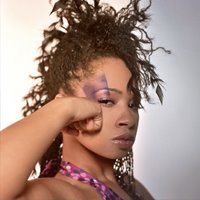
Melanie Durrant: Gonna Get There
By Ryan B. Patrick
Pride Entertainment Writer
Oct. 19 2005
The last time I spoke with talented R&B singer/songwriter Melanie Durrant, it seemed like the stars were finally aligned, and she was ready to blow up. She was signed south of the border to legendary Motown Records and was opening for the likes of Sean Paul and Jay-Z, and all signs pointed to huge international success. But a year later, the spunky Toronto native finds herself without a major label deal (Motown dropped her and never did release her material) and is now back in Toronto with a new label (Koch), and a new independent album, Where I'm Going, set for release on October 27.
Durrant manages to keep things in perspective. Indeed, while the Canadian chanteuse's career begins to play out exactly as the lyrics to her ebullient breakout hit, "Where I'm Going" - "I'm going to get to where I'm going, slowly but surely" - Durrant takes it all in stride.
"I'm only human," the classy Durrant tells Pride News Magazine, in an exclusive telephone interview.
"I wasn't feeling too hot about not having my album released through Motown, but when you fall down, you've gotta dust yourself off and keep it moving. So that's what I've done."
The sparkling vocalist has had music on her mind since she was a small child. Her mother, Karen Durrant, is an established professional singer known for her uncanny impersonations of Tina Turner and Donna Summer.
Durrant fondly remembers singing along to the sheet music that her mother brought home. If the show wasn't in a bar, young Melanie would often watch her mother's performances.
The younger Durrant's style is a honey-dipped dash of R&B, a splash of alternative rock and roll, and a heaping helping of soul. Her singing/songwriting style is often referred to as "adventurous", as her musical influences run the gamut. The admittedly old school Durrant cites artists as diverse and eclectic as Stevie Wonder, Aerosmith and Diana Ross as influences. She describes her sound as "alternative hip hop soul".
But it's almost as if she's defying you to categorize her. Durrant has been best described as a mix of Blu Cantrell, Jill Scott and the late great Minnie Ripperton.
It all started, when, after honing her skills at Toronto's Earl Haig School of the Arts, and training at the Royal Conservatory of Music, Durrant began performing in underground spots across the country - such as Toronto's female Honey Jam talent showcase - which parlayed into a short stint in the Broadway production of "Rent".
It was there she met singer Jill Scott, who encouraged her to continue writing songs.
By now, the whirlwind story behind her signing to the legendary Motown USA label is the stuff of Canadian urban legend: After being introduced to Toronto urban music video director wunderkind X (then known as Little X), he promised her, if he ever directed a car commercial he'd use her song. Sure enough, X got the gig, and the aforementioned, "Where I'm Going" appeared on a PT Cruiser car commercial in 2002.
Motown prez Kedar Massenberg just happened to catch the commercial on television, and Durrant was flown out to New York and - bam - the budding songstress was on a star-studded Motown R&B roster that, among its notables, includes Brian McKnight, Erykah Badu and India.Arie.
Later, Durrant was dropped from the Motown label.
Undaunted by her music industry experiences, Durrant kept things moving. She continued to tour and record fresh material. Her manager (Taj Critchlow of Maxamus Entertainment) started his own label and eventually signed a distribution deal with Koch.
The new album, Where I'm Going, is a 14-track effort that combines tracks from the ill-fated Motown release, with new material. Most of the songs were recorded at downtown Toronto's Soundproof Studios, where Durrant ably nailed each song in one or two takes.
After the jazzy-hip hop brilliance that is the title track (featuring rapper Common), the rest of the album is solid. The "Kill Bill Vol. 1"-inspired cover of "Bang, Bang" (featuring the omnipresent Kardinal Offishall) is on point, as is the shiny happy pop-vibe of "Sky", and the dancehall-riff of "Let Me". Tracks like "Still the Same" and "Eddie" allow Durrant to demonstrate her range, as she invokes a more traditional R&B/soul flavour.
The reggae-vibe of "Same Ol' Thing" could have used a tad more production polish, but is probably the only blip on an otherwise strong project.
Durrant herself cites the acoustically-driven, multi-tracked, "Best Thing" (You're a million miles from me/High as the moon and deep as the sea), as her favorite track.
"It makes me feel really good, and I always get a warm reception from my audience when I'm singing that song," she says.
In some respect, releasing the album independently allows for more creative control, Durrant adds. "And the thing is, Motown promised me creative control, but they didn't deliver.
"But I don't want to focus on negative stuff. Through music, I've expressed my feelings, and I think it feels good to get it off my chest. I feel great right now."
The current Canadian urban music landscape, where artists like Jully Black and Divine Brown are getting mainstream love, bodes well for Durrant.
The timing is right and it's good to see these artists doing their thing, she notes.
All things considered, Durrant is all about leaving the past behind and moving forward.
"The good thing is that my album is coming out, I'm about to go on tour…things are good all across the board."
Wednesday, October 12, 2005
Lil' Kim's Naked Truth
By Ryan B. Patrick
(Oct 5, 2005)
Pride News Magazine
"With my back against the wall/I'm gonna bang my way out" - Lil' Kim
Despite her diminutive 4'11" frame, Lil' Kim is perhaps one of the biggest, most successful female rappers of all time. The fashionable, provocative and overtly sexual Lil' Kim aka Queen Bee is no stranger to controversy.
Last month saw the Grammy-winning Kim head to jail, after being found guilty on three perjury charges, and of conspiracy to commit perjury, for lying to a federal grand jury.
The incident in question was the 2001 gunfight involving the entourage of rap duo Capone 'N' Noreaga and her fierce hip hop rival Foxy Brown, outside the Hot 97 FM radio station offices in New York City. Kim was sentenced to a year and one day for lying at the trial for the shootout. She reported to a Philadelphia prison camp on September 19.
Yet, not even life in the Big House appears to be enough to hold the hip hop diva down.
The irony is that the recent release of her long-awaited fourth solo album, The Naked Truth, will, no doubt, experience stellar sales, even while she's incarcerated.
Kim even shot a reality show (tentatively titled, "Lil' Kim Goes to the Big House") based on her final weeks before she went to prison, and, according to the New York Times, her last weekend on the streets was spent shooting three music videos. She also went on a media blitz prior to her year-and-a-day-long "vacation", conducting media interviews with Newsweek, the New York Times, even recording a sit-down chat with VH1's Fab Five Freddy, for the recent VH1 Hip Hop Honors, which paid tribute to the Notorious B.I.G., among other legendary hip hop artists.
It's clear Kim's a shrewd businesswoman, milking her celebrity in her final days of freedom, instead of staying home sulking.
Yet, in the grand scheme of things, where does Lil' Kim rank as a musical artist?
Love her or hate her, there's no denying her impact. As a recording artist, her uninhibited and sexually-charged style of hip hop has, for better or for worse, forever changed the way we see female rappers.
She has been both admonished and adored for her hardcore lyrics. She has paved the way for other female rap artists such as Trina, Jacki-O and Terror Squad's Remy Ma, and the troubling subtext seems to be: for females to be successful, they need to be served up as eye candy, lyrical prowess be damned.
From her troubled childhood, to the murder of her mentor/lover Notorious B.I.G., to her current stint behind bars - Lil' Kim represents the quintessential hip hop bad girl.
Born Kimberly Denise Jones on July 11th, 1975, and raised in Brooklyn, New York, Kim was left under the care of her father after her parents got divorced when she was 9 years old.
A defiant child, living under the strict rules of her father, she eventually ran away from home.
As the story goes, Kim crashed on friends' couches, lived with drug-dealing boyfriends, and even endured a brief stint as a prostitute.
But after meeting up with mentor and father figure, Christopher Wallace - better known as Biggie Smalls and Notorious B.I.G - Jones commenced to turn her life around.
B.I.G. had just signed a record deal with Sean "Diddy" Combs' Bad Boy Records and wanted to bring her in on his success.
It was Wallace who encouraged her to hone her now trademark rapping skills and set her up as a member of the rap group Junior M.A.F.I.A.
After some initial success with the group (including Top 20 singles, "Playa'z Anthem" and "Get Money") in 1996, Lil' Kim went the solo route and released her controversial debut album, Hard Core.
It was a huge commercial success, but drew heavy criticism for its hardcore, explicit content and the sexy album cover, a first for a female rapper.
Buoyed by the infamous "coming soon" poster (featuring Kim provocatively posed in a spread-eagle squatting position) the album went double platinum and featured Billboard Hot 100 hits such as the album's first single, "No Time" (featuring Diddy), "Crush on You" and "Not Tonight".
Kim's career took a turn when, in the spring of 1997, Notorious B.I.G. was murdered.
She made it known she and Biggie had been in love, and was visibly emotional at his funeral. It's been suggested it was Biggie's death that precipitated Kim's 2000 transformation from an attractive dark-skinned Black woman to a virtual Barbie doll, complete with breast enhancements, omnipresent blonde-coloured weave and plastic surgery and makeup, making her look decidedly Eurocentric.
It is hardly coincidence her new look has corresponded with her growing mainstream popularity, which seemed to blossom at the same time her album, The Notorious K.I.M., went platinum and she had scored a huge hit with 2001's remake of LaBelle's "Lady Marmalade", on which she teamed with Christina Aguilera, Mya and Pink.
The Naked Truth features a racially ambiguous Lil' Kim on its cover, warranting a double take: her skin has been lightened, her pink lipsticked lips in a perpetual China Doll pout, and her trademark blonde hair (weave) seems straighter than ever.
Potential self-hate imagery aside, The Naked Truth definitely sounds like something that was rushed, which it in fact it was, as Jones completed it weeks before her lock-up.
Kim herself admitted, before going off to prison, that this was "the shortest time she worked on a record".
Far from a flop and not quite a classic, the 21-track release, nonetheless, sees Lil Kim near the top of her game. Those expecting to hear a mea culpa in The Naked Truth will instead be treated to a bric-a-brac of glossy pop-rap production, brazen gangsta chatter and the requisite sexy rhymes and dirty talk.
It appears that the raw emotion displayed on this album can be directly attributed to Lil' Kim's incarceration and the fact that she minimizes the party tracks in favour of solid beats and a career-defining opus.
She spouts off on the perils of fame, jealousy and the legal system. The guest stars (T.I., Twista, Snoop Dogg) are kept to a minimum - this is Kim's show.
The obligatory "leave me alone" track, the scathing "Shut Up B--h!", was a middling first single. Yet, she redeems herself (and also demonstrates her range) on the Caribbean-flavoured, Scott Storch-produced, "Lighters Up", where, in-between rousing rhythms and a beaming pride for her hometown Brooklyn, she almost sounds like a bootleg Lauryn Hill.
The island vibe is revisited on "Durty", where Kim bigs up Brooklyn's strong Jamaican presence against a Terrance "Hot Runner" Lovelace's dancehall riddem.
The album falters a bit on tracks such as the unabashed raw sexual energy exhibited on the raunchy, "Kitty Box" (produced by 7 Aurelius), which leaves nothing to the imagination.
She quickly recovers, demonstrating on several tracks why she's known for her lyrical skills, as she practically eviscerates rivals, including 50 Cent ("Spellcheck") and former crew Junior M.A.F.I.A. ("Whoa" and "Last Day"). She saves some extra venom for Foxy Brown on "Quiet", featuring The Game, rapping: "Comin' at me b--h/You're playin' with fire/I ain't gon' come back at you, I'm comin' atcha ghostwriter".
The capper is the final track, "Last Day", where the Queen Bee delivers a heartfelt "I won't give up hope" performance, with lyrics that sound like they were lifted from her diary.
Overall, The Naked Truth is just that, and its solid and authentic New York hip hop production ensures Kim will still be remembered while she's away.
This time next year, she will be out, and it remains to be seen what kind of hip hop world the Queen Bee will be returning home to.
Indeed, before heading to jail, Kim assured family and fans she would be alright, saying, "Today begins a new saga in my life, which I expect to strengthen me and allow me time for reflection. I am blessed to have so many great things in my life - family, friends and God.
"All will be in my thoughts daily. I plan to write music while in prison, read and pray regularly, and will come out a stronger, more confident woman."
(Oct 5, 2005)
Pride News Magazine
"With my back against the wall/I'm gonna bang my way out" - Lil' Kim
Despite her diminutive 4'11" frame, Lil' Kim is perhaps one of the biggest, most successful female rappers of all time. The fashionable, provocative and overtly sexual Lil' Kim aka Queen Bee is no stranger to controversy.
Last month saw the Grammy-winning Kim head to jail, after being found guilty on three perjury charges, and of conspiracy to commit perjury, for lying to a federal grand jury.
The incident in question was the 2001 gunfight involving the entourage of rap duo Capone 'N' Noreaga and her fierce hip hop rival Foxy Brown, outside the Hot 97 FM radio station offices in New York City. Kim was sentenced to a year and one day for lying at the trial for the shootout. She reported to a Philadelphia prison camp on September 19.
Yet, not even life in the Big House appears to be enough to hold the hip hop diva down.
The irony is that the recent release of her long-awaited fourth solo album, The Naked Truth, will, no doubt, experience stellar sales, even while she's incarcerated.
Kim even shot a reality show (tentatively titled, "Lil' Kim Goes to the Big House") based on her final weeks before she went to prison, and, according to the New York Times, her last weekend on the streets was spent shooting three music videos. She also went on a media blitz prior to her year-and-a-day-long "vacation", conducting media interviews with Newsweek, the New York Times, even recording a sit-down chat with VH1's Fab Five Freddy, for the recent VH1 Hip Hop Honors, which paid tribute to the Notorious B.I.G., among other legendary hip hop artists.
It's clear Kim's a shrewd businesswoman, milking her celebrity in her final days of freedom, instead of staying home sulking.
Yet, in the grand scheme of things, where does Lil' Kim rank as a musical artist?
Love her or hate her, there's no denying her impact. As a recording artist, her uninhibited and sexually-charged style of hip hop has, for better or for worse, forever changed the way we see female rappers.
She has been both admonished and adored for her hardcore lyrics. She has paved the way for other female rap artists such as Trina, Jacki-O and Terror Squad's Remy Ma, and the troubling subtext seems to be: for females to be successful, they need to be served up as eye candy, lyrical prowess be damned.
From her troubled childhood, to the murder of her mentor/lover Notorious B.I.G., to her current stint behind bars - Lil' Kim represents the quintessential hip hop bad girl.
Born Kimberly Denise Jones on July 11th, 1975, and raised in Brooklyn, New York, Kim was left under the care of her father after her parents got divorced when she was 9 years old.
A defiant child, living under the strict rules of her father, she eventually ran away from home.
As the story goes, Kim crashed on friends' couches, lived with drug-dealing boyfriends, and even endured a brief stint as a prostitute.
But after meeting up with mentor and father figure, Christopher Wallace - better known as Biggie Smalls and Notorious B.I.G - Jones commenced to turn her life around.
B.I.G. had just signed a record deal with Sean "Diddy" Combs' Bad Boy Records and wanted to bring her in on his success.
It was Wallace who encouraged her to hone her now trademark rapping skills and set her up as a member of the rap group Junior M.A.F.I.A.
After some initial success with the group (including Top 20 singles, "Playa'z Anthem" and "Get Money") in 1996, Lil' Kim went the solo route and released her controversial debut album, Hard Core.
It was a huge commercial success, but drew heavy criticism for its hardcore, explicit content and the sexy album cover, a first for a female rapper.
Buoyed by the infamous "coming soon" poster (featuring Kim provocatively posed in a spread-eagle squatting position) the album went double platinum and featured Billboard Hot 100 hits such as the album's first single, "No Time" (featuring Diddy), "Crush on You" and "Not Tonight".
Kim's career took a turn when, in the spring of 1997, Notorious B.I.G. was murdered.
She made it known she and Biggie had been in love, and was visibly emotional at his funeral. It's been suggested it was Biggie's death that precipitated Kim's 2000 transformation from an attractive dark-skinned Black woman to a virtual Barbie doll, complete with breast enhancements, omnipresent blonde-coloured weave and plastic surgery and makeup, making her look decidedly Eurocentric.
It is hardly coincidence her new look has corresponded with her growing mainstream popularity, which seemed to blossom at the same time her album, The Notorious K.I.M., went platinum and she had scored a huge hit with 2001's remake of LaBelle's "Lady Marmalade", on which she teamed with Christina Aguilera, Mya and Pink.
The Naked Truth features a racially ambiguous Lil' Kim on its cover, warranting a double take: her skin has been lightened, her pink lipsticked lips in a perpetual China Doll pout, and her trademark blonde hair (weave) seems straighter than ever.
Potential self-hate imagery aside, The Naked Truth definitely sounds like something that was rushed, which it in fact it was, as Jones completed it weeks before her lock-up.
Kim herself admitted, before going off to prison, that this was "the shortest time she worked on a record".
Far from a flop and not quite a classic, the 21-track release, nonetheless, sees Lil Kim near the top of her game. Those expecting to hear a mea culpa in The Naked Truth will instead be treated to a bric-a-brac of glossy pop-rap production, brazen gangsta chatter and the requisite sexy rhymes and dirty talk.
It appears that the raw emotion displayed on this album can be directly attributed to Lil' Kim's incarceration and the fact that she minimizes the party tracks in favour of solid beats and a career-defining opus.
She spouts off on the perils of fame, jealousy and the legal system. The guest stars (T.I., Twista, Snoop Dogg) are kept to a minimum - this is Kim's show.
The obligatory "leave me alone" track, the scathing "Shut Up B--h!", was a middling first single. Yet, she redeems herself (and also demonstrates her range) on the Caribbean-flavoured, Scott Storch-produced, "Lighters Up", where, in-between rousing rhythms and a beaming pride for her hometown Brooklyn, she almost sounds like a bootleg Lauryn Hill.
The island vibe is revisited on "Durty", where Kim bigs up Brooklyn's strong Jamaican presence against a Terrance "Hot Runner" Lovelace's dancehall riddem.
The album falters a bit on tracks such as the unabashed raw sexual energy exhibited on the raunchy, "Kitty Box" (produced by 7 Aurelius), which leaves nothing to the imagination.
She quickly recovers, demonstrating on several tracks why she's known for her lyrical skills, as she practically eviscerates rivals, including 50 Cent ("Spellcheck") and former crew Junior M.A.F.I.A. ("Whoa" and "Last Day"). She saves some extra venom for Foxy Brown on "Quiet", featuring The Game, rapping: "Comin' at me b--h/You're playin' with fire/I ain't gon' come back at you, I'm comin' atcha ghostwriter".
The capper is the final track, "Last Day", where the Queen Bee delivers a heartfelt "I won't give up hope" performance, with lyrics that sound like they were lifted from her diary.
Overall, The Naked Truth is just that, and its solid and authentic New York hip hop production ensures Kim will still be remembered while she's away.
This time next year, she will be out, and it remains to be seen what kind of hip hop world the Queen Bee will be returning home to.
Indeed, before heading to jail, Kim assured family and fans she would be alright, saying, "Today begins a new saga in my life, which I expect to strengthen me and allow me time for reflection. I am blessed to have so many great things in my life - family, friends and God.
"All will be in my thoughts daily. I plan to write music while in prison, read and pray regularly, and will come out a stronger, more confident woman."
Subscribe to:
Comments (Atom)