
Friday, April 28, 2006

Caribbean Jazz Show Mixes Old With New


David Rudder and Andy Narell

Caribbean Jazz Show Mixes Old With New
By Ryan B. Patrick
Entertainment Writer
Pride News Magazine
April 26, 2006

The Caribbean jazz concert, held earlier this month, at Toronto’s Mod Club, comprised an energetic exercise in musical fusion.

Featuring elements of jazz, spoken word, hip hop beat boxing and calypso, from both emerging artists (calypso-fusion group Kobo Town and local spoken word artists Anne-Marie Woods, Al St. Louis; along with beatboxers Subliminal and Eddy Da Original One), and established artists (steel pan wizard Andy Narell and the legendary calypsonian David Rudder), the concert was a sublime synthesis of tradition and innovation.

The concert, organized by the Toronto-based Nu Jazz Society, is the third in a series of concert events (the first two events featured Salome Bey and Roy Ayers, respectively).

The group is currently planning a Brazilian/Latin jazz event, in the coming months, says Nu Jazz Society executive director Graham Reid.

The group hopes to change people’s minds about jazz, by incorporating musical elements not widely known to be associated with the genre, according to Reid.The event was also a reunion of sorts, pairing Rudder (known as the “Man with the Message”) with Paris-based steel pan luminary Narell. Narell is the co-leader of the Caribbean Jazz Project and has pioneered the position of Afro-Caribbean steel pan in contemporary music.

The two have collaborated in the past, Rudder told Pride News Magazine before the event. “It’s like a reunion of old friends,” Rudder says. The Belmont, Trinidad native, who, today, calls Toronto home, is a dynamic entertainer and has been touted as one of the top Calypsonians of his generation.

Rudder performed his classic hits such as “The Hammer” and “Trini 2 De Bone”, in his inimitable style. Caribbean jazz is simply jazz from a West Indian context, Rudder says. “It uses the instruments from the Caribbean to create a different voice,” he adds.

And, when it comes to the current generation of calypso artists, things are looking up, Rudder says. There are a lot of emerging artists who are upholding the traditional elements of the music.

As for Rudder, he recently completed a Broadway-styled musical which premiered in Guyana. In addition to working on new music, Rudder says he hopes to bring the musical to Canada sometime next year.
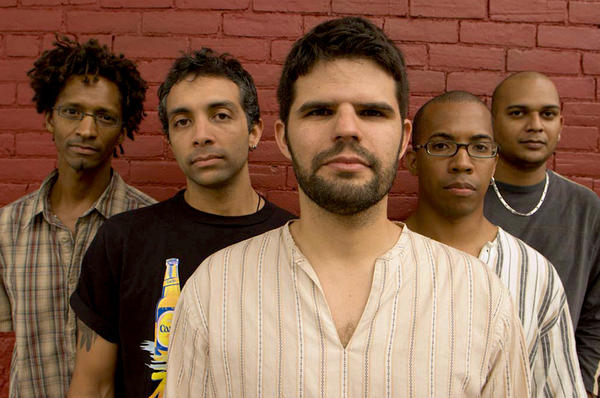

Kobo Town

Relatively new to the Toronto music scene is the band Kobo Town. According to bandleader Drew Gonsalves, Kobo Town is named after the famous neighborhood in Port of Spain, Trinidad, where traditional calypso (kaiso) was born.

This 8-piece multicultural ensemble (Osvaldo Rodriguez, Roger Williams, Derek Thorne, Stich Wynston, Cesco Emmanuel, Ravi Jadoonanan, Linsey Wellman and Gonsalves) fuses Trinidadian roots music with elements of improv-based jazz and groove.

Born in Trinidad, the singer-songwriter says he used to primarily listen to dub music but started a love affair with traditional calypso music, after moving to Canada as a youth.

“When I came here, I became very nostalgic for home. I started reading a lot about West Indian politics and history,” says Gonsalves.

It was delving into the musical history of Trinidad, and about artists such as Roaring Lion, Mighty Spoiler, Lord Invader, Gonsalves says, that alerted him to the richness and depth of the culture.

“The band is very dedicated to calypso and Trinidadian music and the message in the songs,” he says. The music that is kaiso is commonly narrative in form, and carries a cleverly concealed political subtext. This is the tradition Kobo Town is upholding, Gonsalves says.

He founded and fronted the Ottawa-based reggae/calypso/funk fusion group Outcry, in 1992, and, after moving to Toronto, formed Kobo Town in 2004. The band is currently putting the finishing touches on their debut album, which should come out in the next few months.

The band performed a lengthy and well-received set of politically- and socially-charged songs. “I try not to be overly preachy, and I try to rely a lot on imagery,” Gonselves says of the issues the band touches upon. For example, the song “Abitina” deals with domestic violence, “Corbeaux Following” speaks on poverty and desperation in Trinidad, while “Blood and Fire” speaks about globalization.

“I am definitely pleased with the reaction so far,” Gonsalves says of the positive feedback and critical acclaim the band has been receiving so far.

“There is a lot of positive energy in the band, and I think that spills out into the shows.”

Friday, April 14, 2006

All about the Soul and R&B music...

Got a new freelance gig. Check me out at http://bluessoulmusic.suite101.com/.

I'll be writing music articles, reviews and doing the blog thing. Check it out.

Caribbean African Radio Network Wins Broadcasting Licence

Caribbean African Radio Network Wins Broadcasting Licence

By Ryan B. Patrick
Pride Entertainment Writer
April 12, 2006

TORONTO, Ontario -- There will soon be a new Black-oriented radio station broadcasting on Toronto airwaves.
It was announced this Monday that the Caribbean African Radio Network’s (CARN) commercial radio application to the Canadian Radio-television and Telecommunications Commission (CRTC) has been approved.
The bid was spearheaded by CARN president Fitzroy Gordon – the popular Jamaican-born radio personality, television host and newspaper columnist. Gordon says the new CARN FM station will provide a dedicated community voice – via 24 hour daily programming – for the more than 500,000 Caribbean and African residents in the Toronto area.
The specialty commercial station would serve the community by covering local and international news and events, and also by providing a much needed social dialogue on issues of concern affecting the Black community, Gordon said.
This marks the second time CARN has applied for the licence – a similar bid was denied in 2002.
“It hasn’t sunk in it,” Gordon told Pride News Magazine hours after the news was announced.
“I’m going to give thanks and praise to the Maker for this wonderful day.”
Gordon, a well-known member and supporter of the African Canadian community, has been working to establish a Black-oriented radio station since 1998.
“I decided that I wanted to do something special, from a broadcasting point of view, for my community. I wanted to see a station that was designed to serve the Caribbean and African community, 24 hours a day, where we could have talk shows and forums that would edify our youngsters and hear their views,” he added.
But there are specific stipulations on the new broadcasting licence.
Gordon must now incorporate CARN as a corporation and submit, within three months, an amendment to the application that proposes a suitable FM frequency for the new station.
The CRTC (the body which regulates the Canadian broadcasting industry) turned down CARN’s original request to operate at FM frequency 98.7 MHz (with an average effective radiated power of 508 watts) on the grounds it was too close to an established signal, namely CBC Radio 99.1 FM.
The new license will be fully granted once CARN proposes an FM frequency that the CRTC deems acceptable and technically feasible.
“It will be up to the engineers, and Industry Canada (the technical arm of the CRTC) will be working on it…to finalize the best frequency to serve our community,” Gordon says.
Once these conditions are met to the CRTC’s satisfaction, Gordon says he expects the station to be up and running by fall of 2007.
The new station is to be owned 45 per cent by Douglas Kirk of Burlingham Communications Inc. (a White-owned company) and 55 per cent by Caribbean and African Radio Network Inc., which in turn, is to be held 70 per cent by Global Communications International Inc. and 30 per cent by Delford L. Blythe of Blythe Business and Consulting Inc.
Gordon noted that the soon-to-be-formed board will consist of prominent members of the Black community.
The recent CRTC ruling reveals that there was solid opposition to CARN’s radio station bid, most notably from the African Canadian Social Development Council (ACSDC) and, interestingly enough, Milestone Radio Inc., owner of urban music station FLOW 93.5.
The ACSDC had expressed concerns that the application did not “adequately serve the radio and ownership interests of the continental African Canadian community in Toronto.”
Milestone Radio objected on the grounds that CARN would negatively impact FLOW 93.5 and also claimed that FLOW, along with the Toronto campus/community radio outlets, are satisfactorily meeting the listening needs of the community.
Gordon countered that the new station would serve the larger Caribbean and African population of the Greater Toronto Area, regardless of geographic heritage.
And as for FLOW 93.5, Gordon says that CARN attends to a specific need that he feels FLOW is currently not addressing.
“We’re going to do for our community what FLOW said they would have done and did not do,” Gordon says, adding that FLOW markets itself as an “Urban and Hip Hop” station that caters to a specific youth audience.
“A lot of people were reluctant to provide support for CARN because they were angry that FLOW did not carry through on their [community] mandate,” Gordon says.
But overall, the community response was positive and its overwhelming support really helped win this licence, Gordon notes.
“We received thousands of support letters from the public sector, private sector and the churches.”
CARN FM will target a broader demographic and provide family-based programming, and intends to fill a niche by offering a range of ethno-cultural diversity programming – including international news, music and sports – not currently covered by FLOW, Gordon says.
Indeed, the CRTC commission itself concluded that the proposed CARN station would have very little commercial impact upon existing Toronto radio broadcasters.
Once launched, CARN FM will broadcast daily programs dedicated to Caribbean and African local and international news, talk, sports, music entertainment and religion.
A typical broadcasting day, Gordon says, will include Gospel music in the early morning, hourly local and international newscasts, live sports broadcasts, talk shows, and “World beat” Caribbean and African music.
Spoken word programming would comprise 10 per cent of all CARN programming and the station will also include a minimal amount of “mainstream” music including R&B and Hip hop from artists of Caribbean and African descent.
Sports news would focus on the coverage of cricket, soccer and track and field events.
Featured programming would also cover issues including health, lifestyle, investments, law, immigration, and women’s issues.
Another key component of the radio service would be programming that focuses on a range of topics of interest to youth.
CARN is mandated to operate within the “Specialty Format” meaning that at least 50 per cent of weekly programming be specifically focused on World Beat and Non-classic religious music.
This includes a range of musical styles including: reggae, rock steady, and ska, from Jamaica; calypso and soca from Trinidad and other Caribbean islands; highlife from Ghana; Shona from Zimbabwe, juju from Nigeria; pan jazz from Trinidad; afro beat from Nigeria; bend skin from Cameroon and Chutney from Guyana and Trinidad.
It is this specialty format requirement that will distinguish CARN from other commercial radio services in Toronto, and ensures that CARN will always stick to its community mandate, Gordon says.
CARN will represent a new radio station with a clear vision and a proactive mission for the local Caribbean and African population and all Canadians in general, Gordon suggests.
“I am guaranteeing my people that I will not sway from my promise. My word is my honour,” he adds.